At a glance
- Slogen rises in the Sunnmøre Alps and plunges in a pyramid shape into Norangsfjord, an arm of the Hjørundfjord.[12]
- The Hjørundfjord stretches for 35km, with farms and small villages on the green terraces above the water.[13]
- 105 minutes on the water with a live English guide, from US$157, rated 4.88 from 150 reviews.[14]
- The roundtrip cruise from Ålesund takes 5 hours and costs from US$115, calling at Trandal, Saebo, Urke and Øye.[15]
- In summer an express boat from Ålesund to Øye stops at Trandal, Sæbø and Urke, and ferries link more shoreline villages.[16]
- Top choice RIB Fjordsafari Hjørundfjord from US$157 Duration105 minutes[14]Rating4.88 from 150 reviews[14]GuideLive tour guide: EnglishCancellationFree cancellation up to 24h[14] Check availability
- Hjørundfjord Fjord Cruise from US$115 Duration5 hours[15]Rating4.58 from 282 reviews[15]GuideLive tour guide: EnglishCancellationFree cancellation up to 24h[15] See this tour
- RIB to Hjørundfjord from US$158 Duration2 hours[17]Rating4.93 from 13 reviews[17]GuideLive tour guide: EnglishCancellationFree cancellation up to 24h[17] See this tour
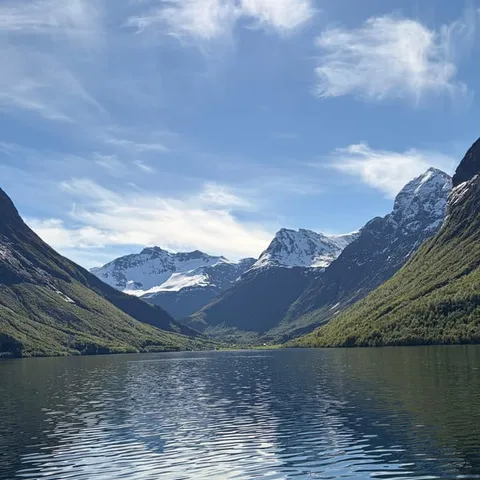
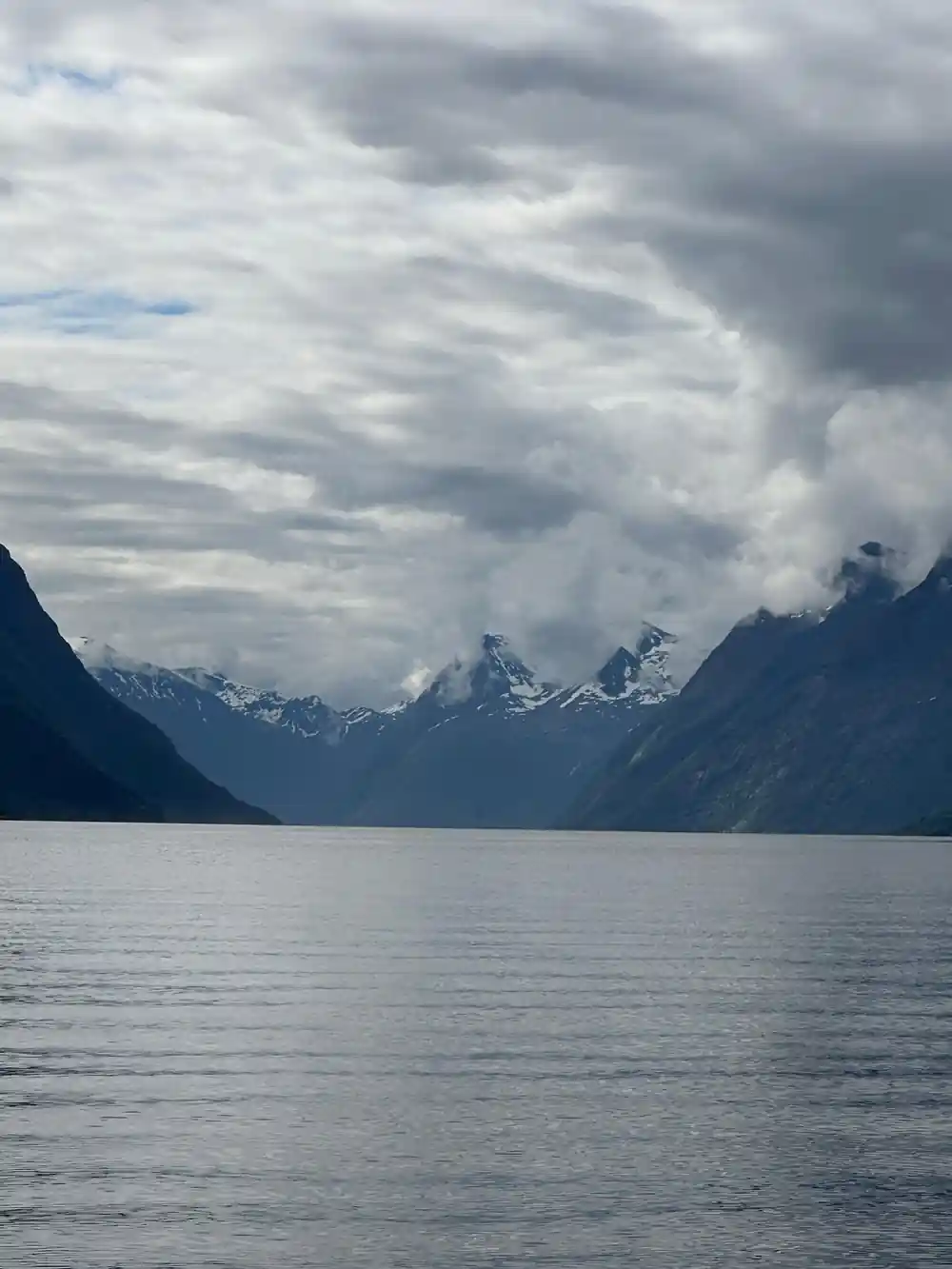
At 1,564 meters above sea level, Slogen rises in the heart of the majestic Sunnmøre Alps. It is distinguished by its spectacular pyramid shape that plunges directly into the waters of Norangsfjord, an arm of the famous Hjørundfjord.
Is the Hjørundfjord and Slogen trip worth it?
On the water
Slogen: the pyramid above the fjord
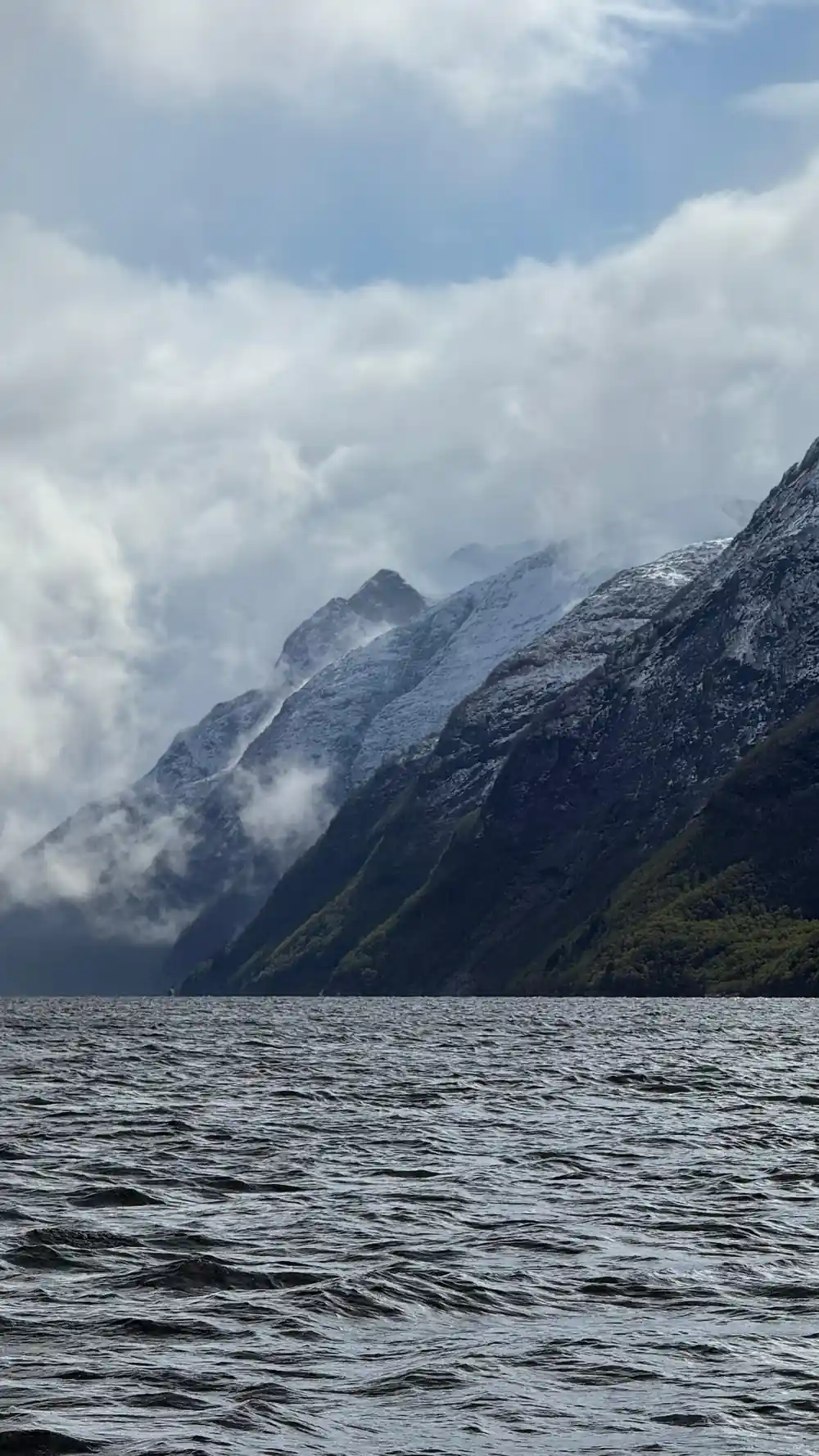
Slogen does not sit in a polite row of peaks. It stands alone above the inner end of the Hjørundfjord, a sharp pyramid of grey rock with grass and scree at its feet and deep water almost directly below. At 1,564 meters it rises in the heart of the Sunnmøre Alps, and its shape plunges straight into Norangsfjord, an arm of the Hjørundfjord.[12] Seen from the deck of a boat it looks like a wall that grew a point. Seen from the ridge, it feels like a knife edge with a view worth every step.
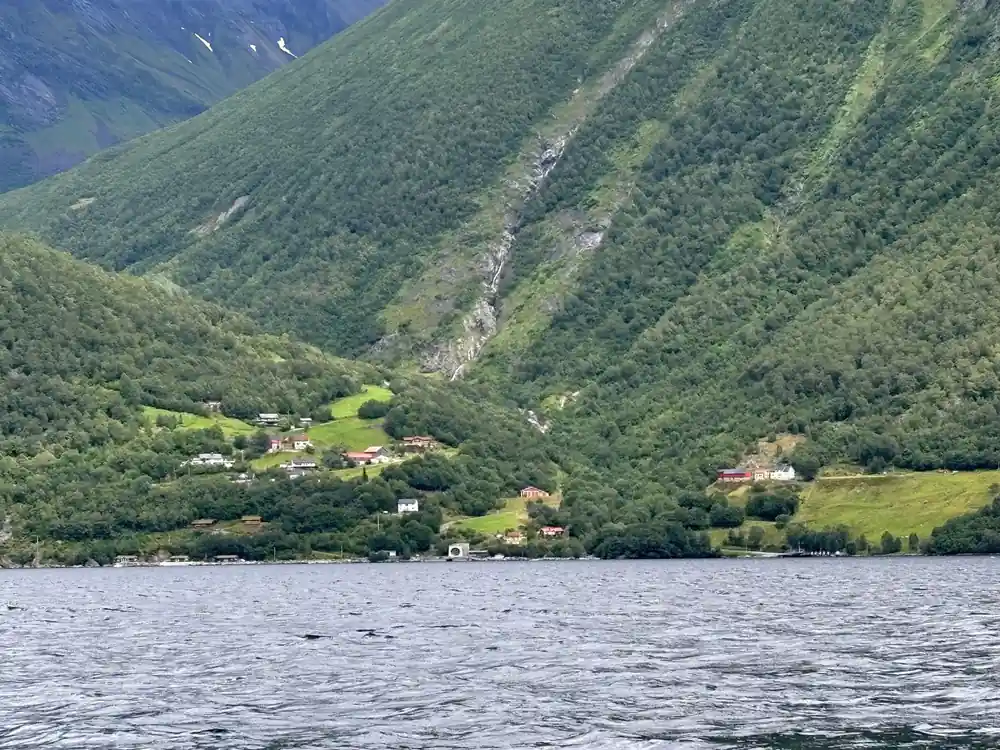
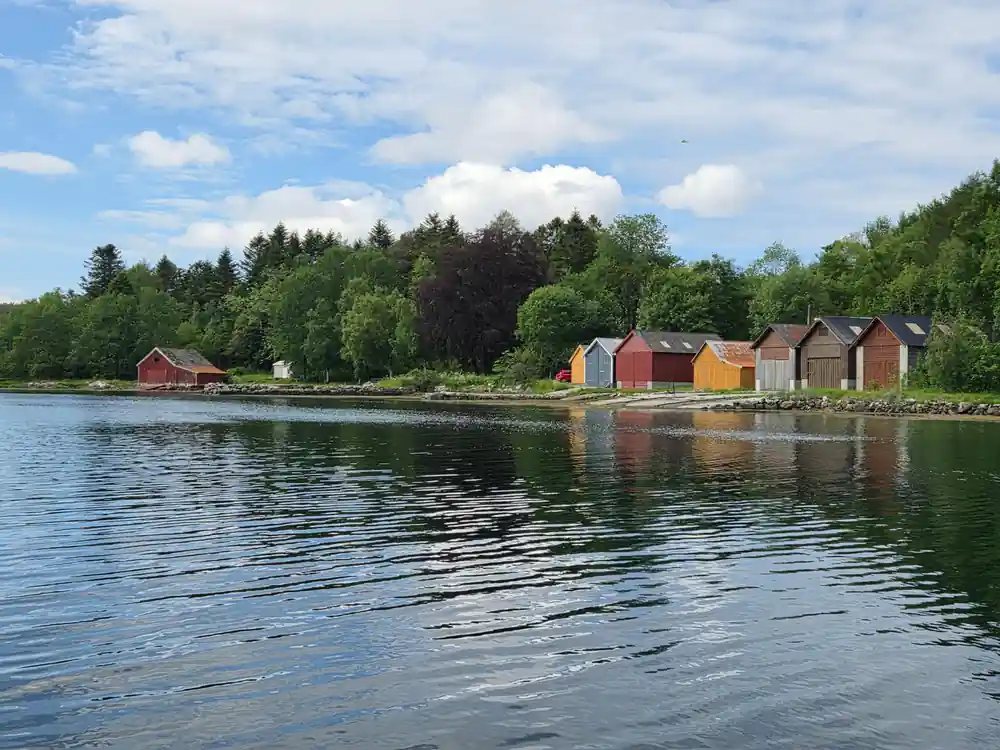
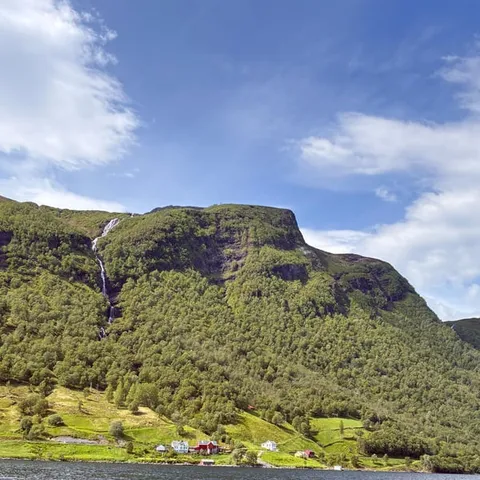
The fjord below it stretches for 35km, long enough that the light and the shape of the mountains change constantly as you travel.[13] Farms and small villages sit on green terraces above the shoreline, and old boat houses lean out over the water. Early morning flattens the surface and puts a sheen on the rock faces; by afternoon a breeze usually ripples the fjord and softens the reflections. Low cloud can hide the summit completely while the water at its foot stays calm and bright, so give yourself more than one chance to see the peak.
The first ascent and the unclimbable reputation
Slogen earned its reputation the hard way. From the valley the upper mountain looks like a closed door: a narrow ridge, broken rock, and a summit block that seems to offer no obvious way up. The story that the peak was called unclimbable is part of why its first ascent matters so much to the people who live under it. What changed was not the mountain but the climbers, and the willingness to keep going where the easy line ran out above a long drop.
The names around that story belong to the wider exploration of these valleys. The British mountaineer Cecil Slingsby, whose climbing is tied to Hjørundfjord and the Sunnmøre peaks, was one of the visitors who treated the fjord farms as a base and the mountains as the goal. Routes that were once serious expeditions are now walked by fit hikers in a long day, yet the mountain has not become tame. Snow can linger in shaded gullies, wet rock is slippery, and the last stretch still asks for hands as well as feet.
You can still feel the scale of that climb from the water. The lower slopes look gentle, then the rock steepens, and the summit ridge lifts away from everything around it. Standing on the deck, the old verdict makes sense quickly enough: from below, the top looks impossible, and the surprise is that anyone found a way up at all.
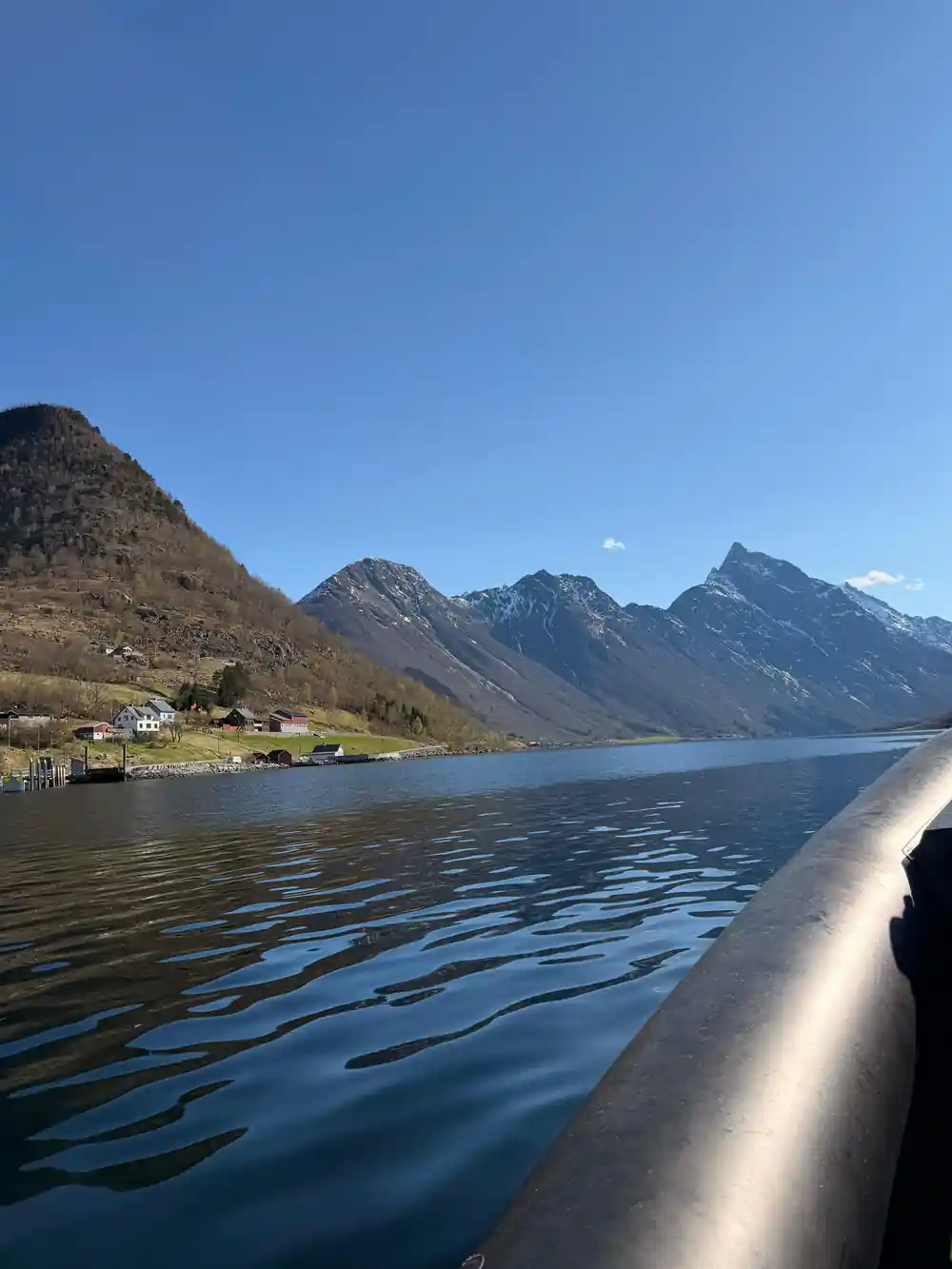
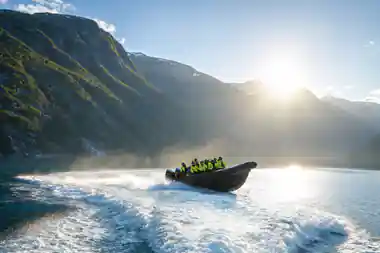
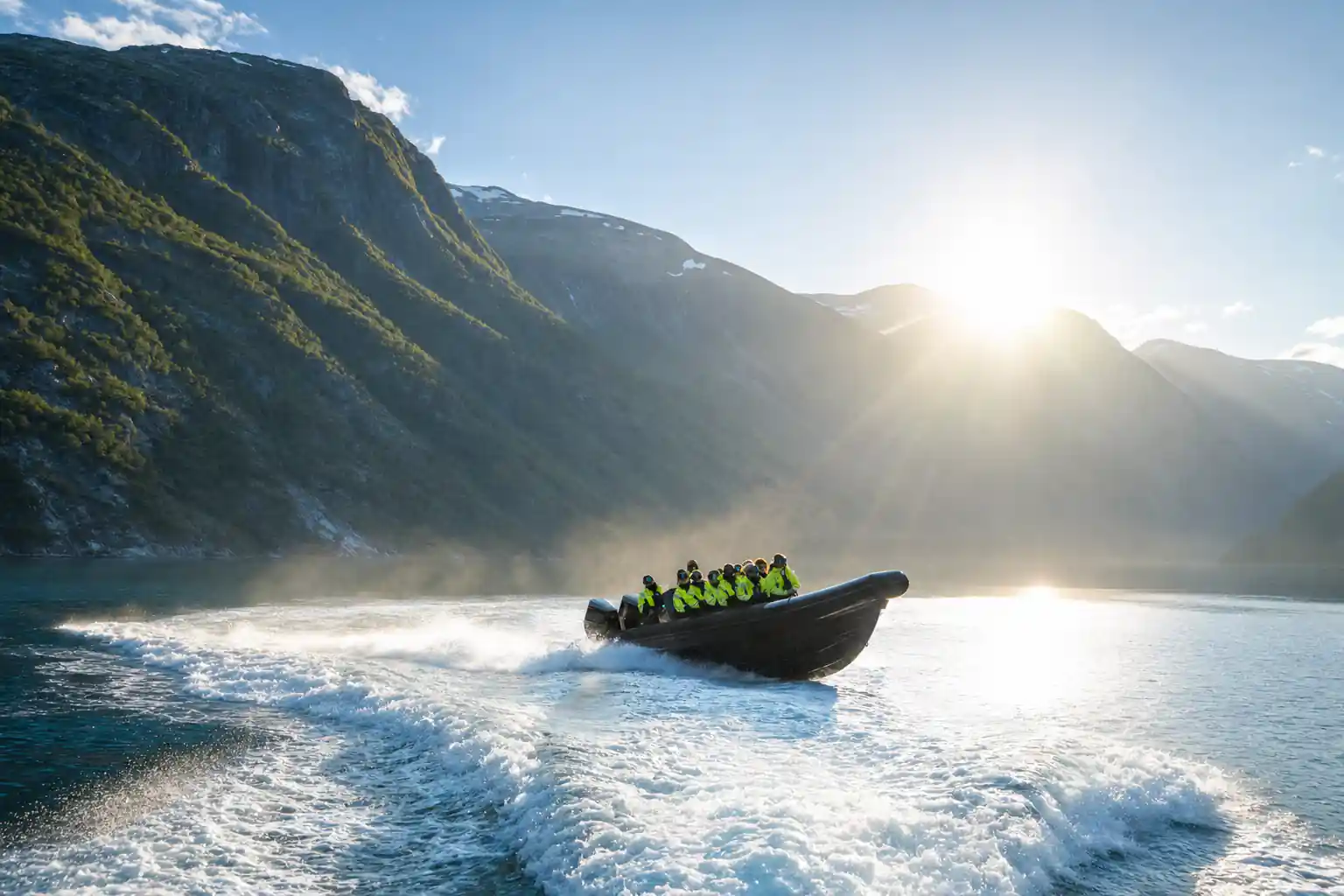
A RIB wake on the Hjørundfjord, with the Sunnmøre Alps standing over the water
On the water: RIB safaris and fjord cruises
The fastest way to see Slogen's full height is from the fjord in a RIB. The safari booked here, RIB Ålesund - Fjordsafari Hjørundfjord, lasts 105 minutes, has a live tour guide in English and stops at Hjørundfjorden, and prices start from US$157.[14] It is rated 4.88 from 150 reviews, you can reserve now and pay later, and free cancellation is available up to 24 hours in advance for a full refund.[14]
If you would rather travel slowly, the Hjørundfjord Fjord Cruise roundtrip from Ålesund takes 5 hours and costs from US$115, calling at Hjørundfjorden, Trandal, Saebo, Urke and Øye.[15] A second RIB, Fjordsafari with RIB to Hjørundfjord, runs 2 hours, costs from US$158 and is rated 4.93 from 13 reviews.[17] Keep watching the water between the mountains: harbour porpoises are the fjord's most common cetaceans, appearing singly or in small groups as they hunt fish near the surface.[19]
A RIB covers ground quickly, which means you can see the inner fjord without giving up the rest of your day. Guides slow down at the best viewpoints, and a 105-minute run is often enough to take in the whole arm of water.[14] On the way back, look behind you: Slogen shows a different face from every bend, and the villages on the shore slide past in a way that finally makes the map make sense.
Boat services and shoreline villages
You do not have to join a tour to get out on the water. In summer an express boat service runs from Ålesund to Øye and stops at Trandal, Sæbø and Urke.[16] Drivers can use ferry crossings between Ytre Standal, Trandal, Sæbø, Skår and Leknes, which turns the shoreline into a slow journey in its own right.[16] Both put you in places where the mountains are close enough to fill the whole sky.
For anyone in Ålesund without a car, the fjord is still within reach: in summer the express boat leaves from the town, and RIB departures and coach trips leave from the same area.[16] Ask where your trip meets when you book, allow time to get there, and treat the boat ride as part of the day out rather than a transfer between two places.
Public boats still work this water. In summer an express boat runs from Ålesund to Øye, calling at Trandal, Sæbø and Urke on the way.[16] Distances here are short on a map and long on the water, so leave slack in your day: a quay that looks close may still take a chunk of the afternoon to reach.
1,564 m
Slogen rises in the Sunnmøre Alps and plunges in a pyramid shape into Norangsfjord, an arm of the Hjørundfjord.[12]
Norangsdal and the drowned road
South of the fjord, Norangsdal is a green valley holding a lake that should not be there. In 1908 a rock fall from Keipen formed Lygnstøylvatnet, and beneath the water you can still make out remains of the old road, the foundations of the farmhouses and the gateway.[21] It is a strange, quiet place to stand: clear water, sunken walls, and a route that once carried carts and Sunday walkers. The valley narrows and opens as you follow it, with waterfalls running on the steep sides after rain.
This is easy to fold into a boat day. A Hjørundfjord cruise and Norangsdal bus tour from Hellesylt takes 3.5 hours and costs from US$94, with coach legs as well as time on the fjord.[22] If you are driving, the ferries and the valley road let you build your own version at your own pace. Start before midday if you want photographs of the water, because the shadows in a Norwegian valley arrive early.
Norangsdal is not a museum piece, though. Farms still work the valley floor, and the road follows much the same line the old one did before the rock fall. A short stop is usually enough to look down into the clear water, read the shapes of the walls, and carry on towards the fjord with a story you did not expect to collect.
Hotel Union Øye and the age of the luminaries
Just down the valley, Hotel Union Øye was established in 1891 and gained fame when the aristocracy and luminaries of Europe came looking for nature without sacrificing luxury and comfort.[20] Wooden verandas, mountain air and a landing stage for boats set the tone. The building is a reminder that people have been travelling here for the scenery, and for the feeling of being far away, for a very long time.
Modern operators work the same water. Fjordsafari with RIB to Hjørundfjord, run with Uteguiden.com, lasts 2 hours with a live guide in English and costs from US$158.[17] For a private day, a private Hjørundfjord cruise limited to 10 participants takes 4 hours, from US$3667.[23] Between those two extremes sit the ordinary RIB and cruise departures that fill the timetable, and they are the ones that turn a short stop in Ålesund into a proper fjord day.
Weather, packing and planning your day
Ålesund has an oceanic climate, with cold, rainy winters and cool summers.[18] Rain is part of the deal here, and it is also what keeps the valleys so green. On the fjord the wind matters more than the temperature: a still morning feels mild, and the same morning with a breeze behind it feels sharp. Pack layers you can add or shed, a waterproof shell, and shoes with grip for wet rock and gravel.
For the RIB, wear what you do not mind getting damp and keep a strap on your camera or phone. Starting times vary by date, so check availability before you commit to a whole day, and book the boat before the bus if you are fitting this around a cruise call.[14] Finally, leave a gap in the plan. Good views of Slogen often turn up when the cloud lifts later in the day, long after the earliest boats have come back in.
From-prices for Hjørundfjord tours in US dollars
Every figure is a GetYourGuide from-price for the listing named in its bar:[14][15][17]
What a Hjørundfjord boat day costs
From-prices of these GetYourGuide listings:[14][15][17][24]
When to book and when to travel
Plan the Slogen day
Pick your boat
Choose a RIB for speed and spray, or the roundtrip cruise if you would rather watch the farms slide past. Both leave from the Ålesund area.
Book with flexibility
Look for listings that let you reserve now and pay later and offer free cancellation, so a change of plan costs nothing and you can wait for a settled forecast.
Allow travel time
Boat services and ferries run to their own rhythm, so leave a margin. Check availability for your date's starting time before fixing the rest of the day.
Dress for boat air
Even a cool summer day feels sharp once the boat moves. A windproof layer, gloves and a hat make the ride comfortable, and a dry bag protects your phone.
Add the valley
Norangsdal and Lygnstøylvatnet sit close to the fjord, with a submerged road and farm foundations visible below the surface.
Ride the fjord under Slogen's pyramid
from US$157Reserve now & pay later