At a glance
- The Hjørundfjord stretches for 35km beneath the jagged peaks of the Sunnmøre Alps, and Slogen rises to 1,564 meters above Norangsfjord.[1][2]
- Ålesund has an oceanic climate with cold, rainy winters and cool summers, so pack for wet weather in every season of the year.[3]
- RIB Ålesund - Fjordsafari Hjørundfjord runs 105 minutes, stops in Hjørundfjorden and starts from US$157 per person.[4]
- A summer express boat from Ålesund to Øye stops at Trandal, Sæbø and Urke, and ferries cross between Ytre Standal, Trandal, Sæbø, Skår and Leknes.[5]
- Harbour porpoises are the fjord's most common cetaceans, appearing singly or in small groups as they hunt fish near the surface.[6]
| Summer | Autumn | Winter | |
|---|---|---|---|
| Daylight | Long days, late sunsets | Days shortening quickly | Short days, low sun |
| Weather feel | Cool, damp, changeable | Cooler, windier, wet spells | Cold, rainy, snow above |
| Water and light | Often flat early in the day | Low sun across the slopes | Dark water, sharp contrasts |
| What to pack | Shell, midlayer, sunglasses | Warm layer, gloves, rain gear | Thermal base, hat, gloves, shell |
| Getting around | Summer express boat via Trandal, Sæbø, Urke[5] | Ferry crossings between the villages[5] | Check availability for starting times[4] |
Established in 1891, Hotel Union Øye gained fame when the aristocracy and luminaries of Europe sought experiences to indulge in nature without sacrificing luxury and comfort.
Quiet water, changing sky: planning your fjord day
Worth knowing first
On the water
- Waterproof shell, hat and gloves, whatever the month
- Reserve now and pay later on the RIB listings[4]
- Ferry crossings link Ytre Standal, Trandal, Sæbø, Skår and Leknes[5]
- From-prices start at US$104 for the Hellesylt RIB to Geirangerfjord[7]
Summer: midnight light and calm water
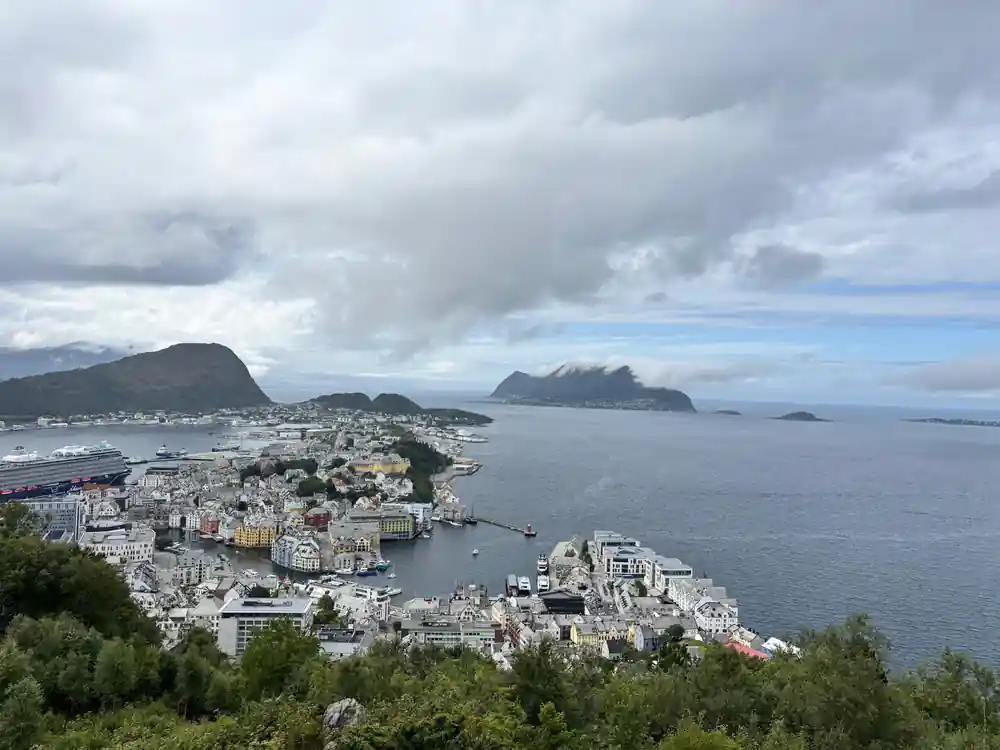
Summer on the Hjørundfjord is long, bright and green. The fjord stretches for 35km through the Sunnmøre Alps, and from the water you look up at slopes that rise almost straight out of the sea, with waterfalls threading down between birch and pine.[1] Slogen, a 1,564-meter mountain in the Sunnmøre Alps, has a spectacular pyramid shape that plunges directly into Norangsfjord, an arm of Hjørundfjord, and the name is worth knowing before you set off.[2] Daylight runs far into the evening, the surface often lies flat, and the light on the peaks shifts from gold to pale grey and back again.
Summer is also the season when the fjord is easiest to reach without a car. There is a summer express boat service from Ålesund to Øye that stops at Trandal, Sæbø and Urke, and drivers can use ferry crossings between Ytre Standal, Trandal, Sæbø, Skår and Leknes.[5] If you are working out when to visit fjords in norway, this is the bright half of the year, with long days and plenty of departures. Book the water time you want first, then build the rest of the day around it, because boats fill on the clearest dates.
Autumn on the Sunnmøre slopes
Autumn changes the colour of the Sunnmøre Alps quickly. The birch woods above the fjord turn yellow and rust, the high ridges catch their first dusting of snow, and waterfalls that thin out in late summer come back to life with the rain. The air is clear, and the low sun rakes across the slopes through the middle of the day. Daylight shortens fast, so a late afternoon departure can feel like an evening one by the time you turn for home.
Autumn suits slower boats and time ashore. The Hjørundfjord Fjord Cruise roundtrip from Ålesund takes 5 hours and calls at Hjørundfjorden, Trandal, Saebo, Urke and Øye.[8] Inland, in Norangsdal, a rock fall from Keipen formed Lygnstøylvatnet in 1908, and beneath the water you can still see remains of the old road, the foundations of the farmhouses and the gateway.[9] Hotel Union Øye was established in 1891 and gained fame when the aristocracy and luminaries of Europe came for nature without giving up luxury and comfort.[10]
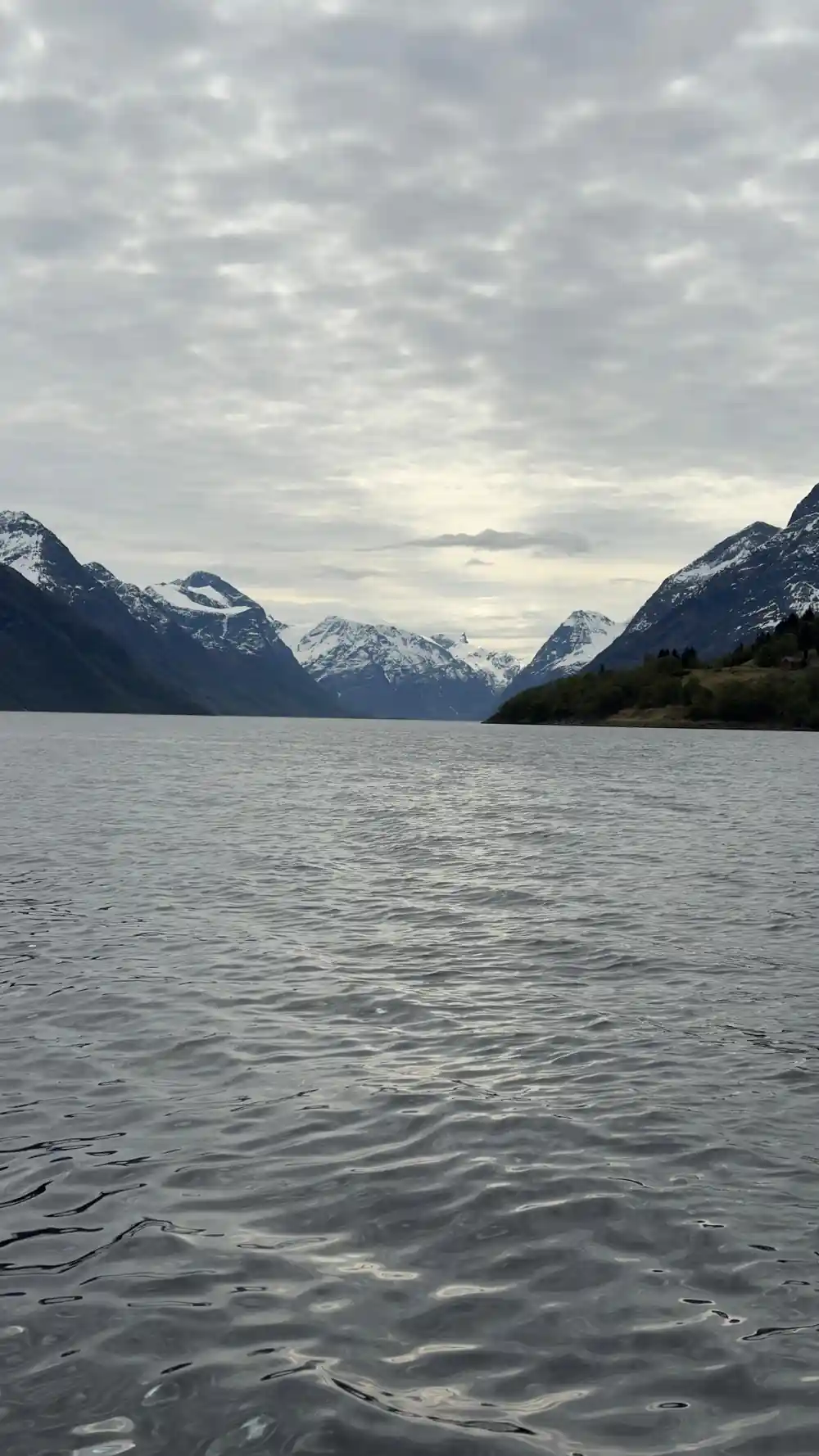
Morning flat water below the Sunnmøre Alps on the Hjørundfjord.
Winter fjord cruising and snowline views
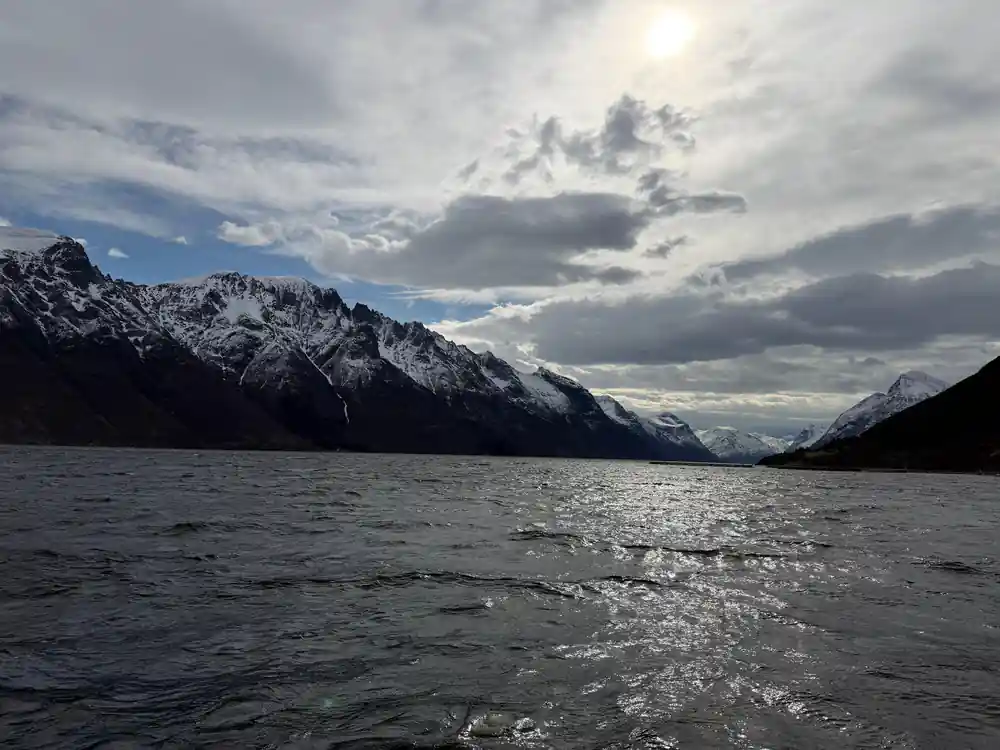
Ålesund has an oceanic climate, with cold, rainy winters and cool summers.[3] In practice that means wet and windy weather in town and snow on the high ground above the fjord. Around the middle of winter the usable daylight sits in a short window in the middle of the day, and the water turns dark and heavy under a low grey sky. The peaks of the Sunnmøre Alps hold their snow, and on clear days the whole fjord looks black and white.
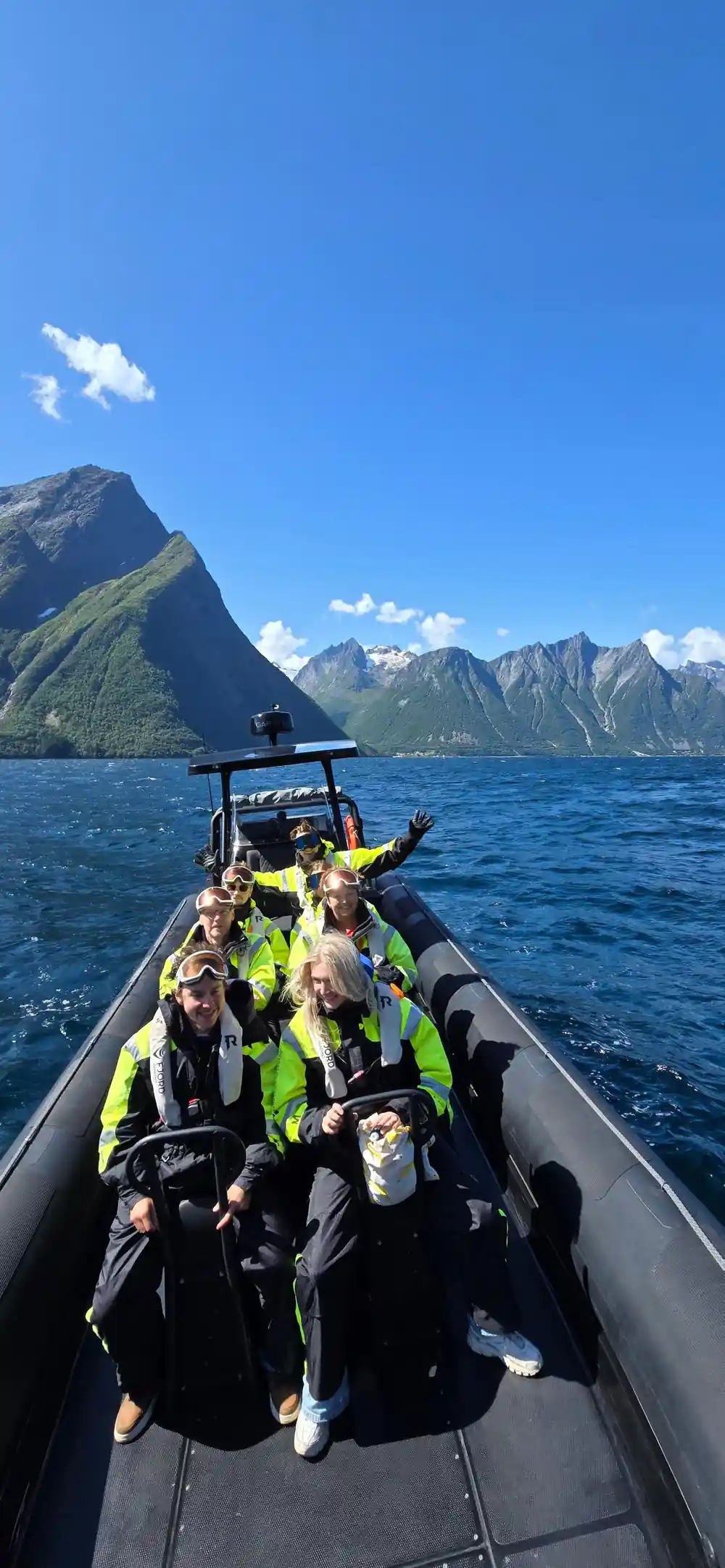
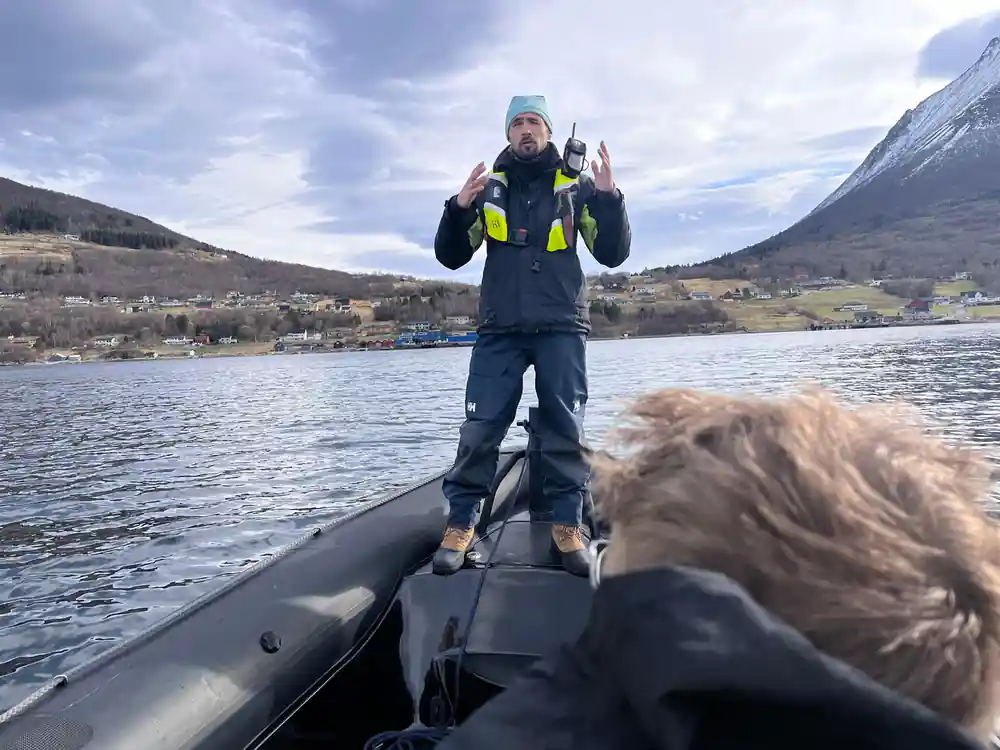
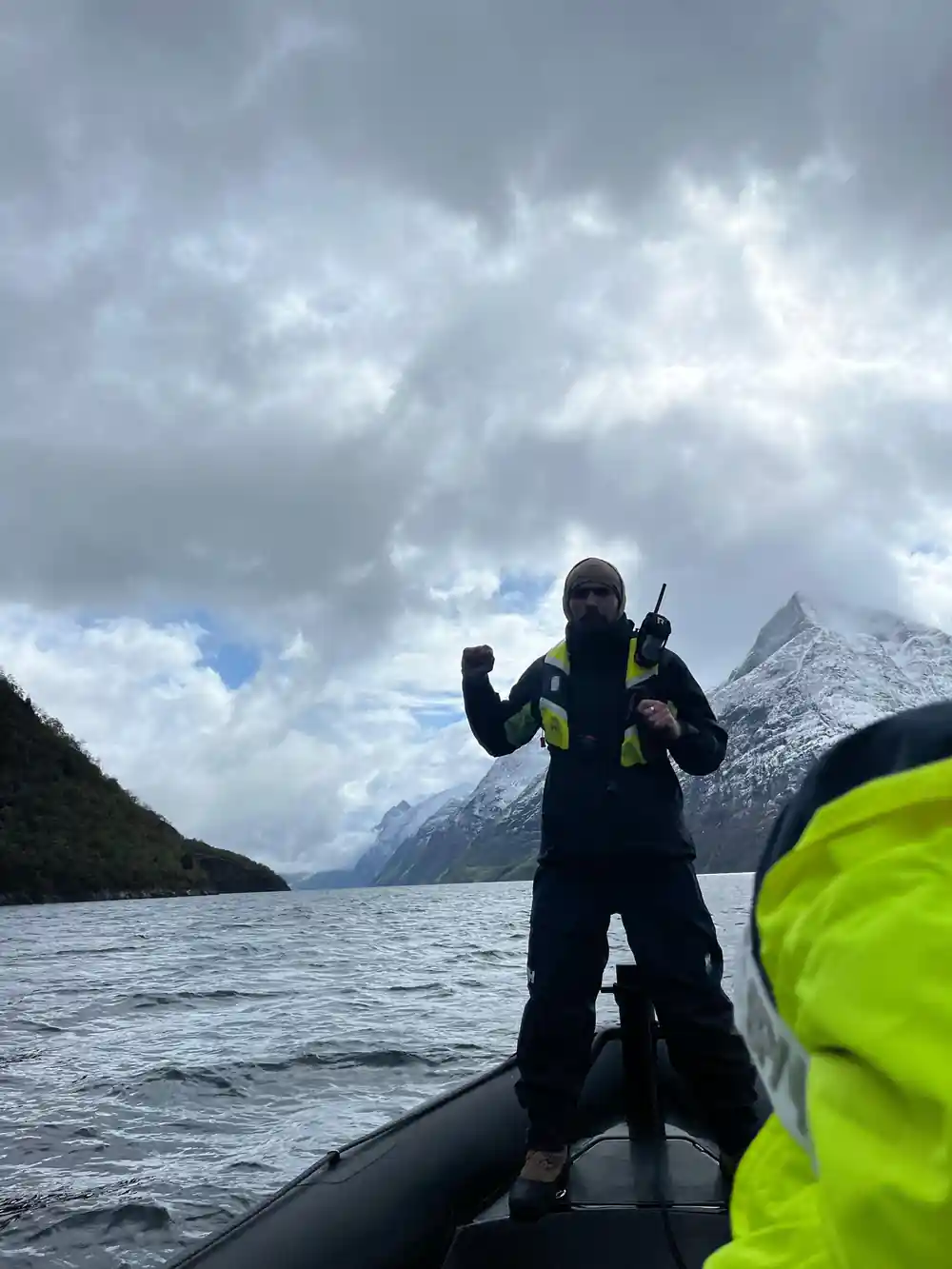
A winter fjordsafari is a different day out, quieter and colder, with the mountains standing over dark water. The boat feels small against those walls, and the cold keeps the ride brisk. The RIB Ålesund - Fjordsafari Hjørundfjord runs for 105 minutes and stops in Hjørundfjorden, with a live guide in English.[4] Reserve now and pay later is available, and free cancellation up to 24 hours in advance gives you a full refund if plans change.[4]
If you are choosing between a summer visit and a winter one, the honest difference is comfort. Summer asks very little of you beyond a windproof layer and an early start. Winter asks for proper gloves, a warm hat and a willingness to be cold while the boat is moving. Both give you the same mountains, the same dark water and the same quiet away from the engine.
Spring conditions and improving stability
Spring arrives late in these valleys. Snow melts on the high slopes, the waterfalls fill with meltwater, and the fjord turns milky green near the streams. Mornings often come in flat and hazy, and the long twilight of late spring makes an evening departure pleasant again. Harbour porpoises are the fjord's most common cetaceans, appearing singly or in small groups as they hunt fish near the surface, so it pays to watch the water as well as the shoreline.[6]
Spring works well if you want daylight without the height of summer. The Fjordsafari with RIB to Hjørundfjord is listed at 2 hours with a live guide in English.[11] If you are based further up the fjord, the RIB from Hellesylt through Geirangerfjord takes 1 hour and stops at Hellesylt, the Seven Sisters Waterfall, Friaren and Geirangerfjord.[7] Check availability to see starting times for your date, since schedules follow the season.[11]
from US$157
The RIB Hjørundfjord tour from Ålesund runs 105 minutes with a live guide in English and free cancellation up to 24 hours in advance.[4]
Why mornings stay calmer than afternoons
Fjord water responds to the land around it. Overnight the slopes cool, air drains down the valleys and the surface settles into long, glassy patches. As the day warms, air begins to move again, running up the valleys and along the fjord, and a steady breeze builds across the water. Add the wash of ferries and other boats, and the same stretch of fjord can look quite different later in the day from how it looked at breakfast.
For a RIB trip this is worth planning around. Early departures usually meet the calmest water, which makes for smoother riding, easier photography and a better chance of spotting porpoises at the surface. The RIB Ålesund - Fjordsafari Hjørundfjord is listed at 105 minutes, so a morning slot still leaves the afternoon free.[4] If you can only go later, watch the wind rather than the clock, and accept that the ride may be bouncier.
Forecasts and sea conditions before you book
Wind is the number that matters most on the fjord. Look at the forecast for your date, then again the evening before and once more on the morning. If you are checking sykkylven weather before setting out, wind speed and direction tell you more than the temperature line does. The word yr is Norwegian for drizzle, the fine rain that drifts across the fjord. A sykkylven yr forecast points to damp air rather than a storm, and a waterproof shell deals with it.
Ashore there are other ways to spend a grey day. The Alesund: City Sightseeing Hop-On Hop-Off Bus Tour is valid for 1 day from first activation, is wheelchair accessible and includes an audio guide in Spanish, English, French, German, Italian, Japanese, Dutch and Chinese.[12] Drivers also have ferry crossings between Ytre Standal, Trandal, Sæbø, Skår and Leknes to work with.[5] On a wet afternoon the Jugendstil streets of the city centre and the climb to the Aksla viewpoint fill a few hours well, and both are as good in drizzle as in sun.
Rain, spray and snow: what to expect
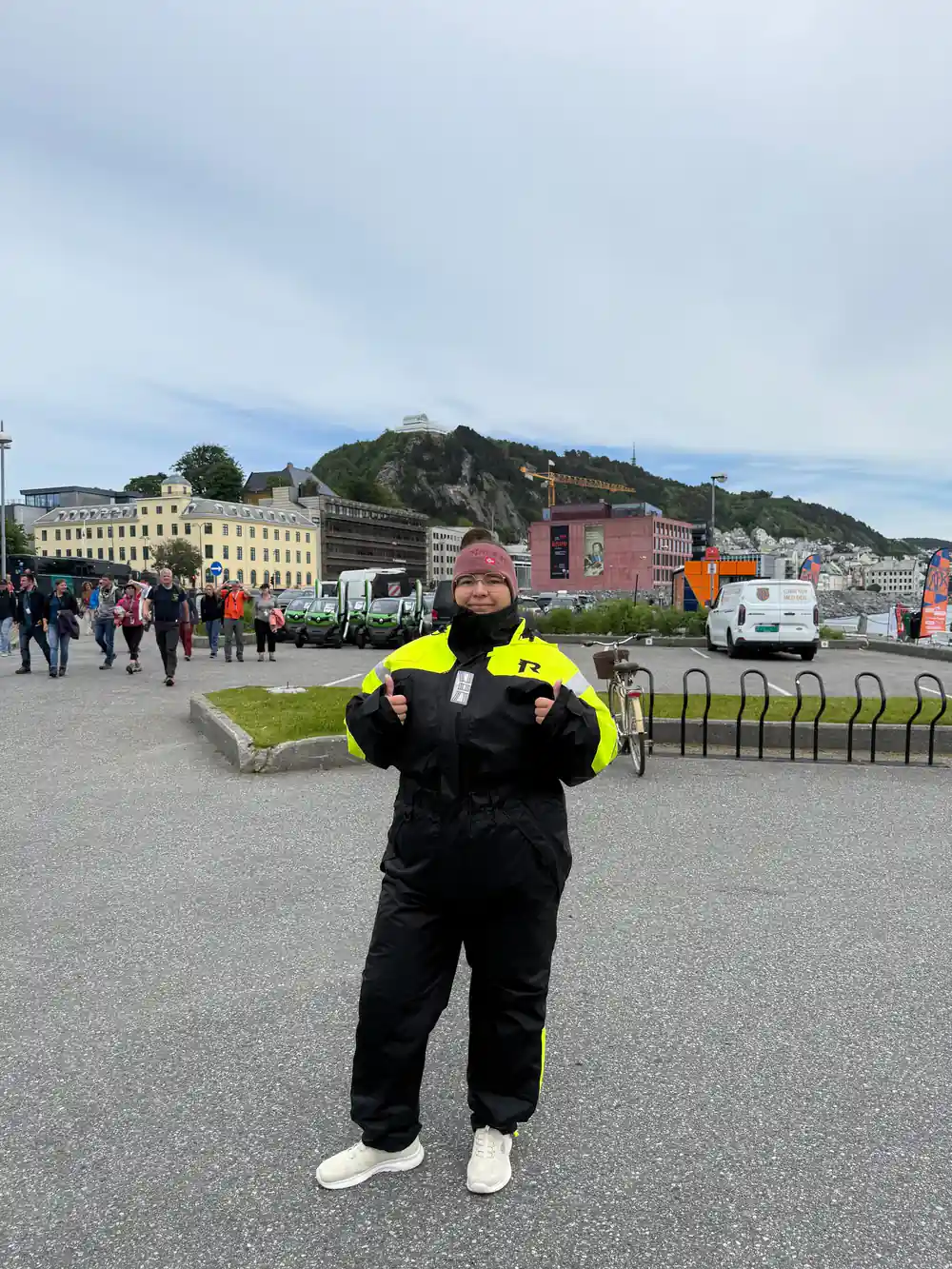
Rain is part of the deal on this coast, and spray is part of any RIB ride. A waterproof outer layer, a warm midlayer, a hat and gloves make the difference between a great time on the water and a cold one. Sunglasses help when the low sun comes off the surface, and a dry bag or waterproof pouch is kinder to a phone than a jacket pocket. On a RIB you sit low and close to the water, so expect to get damp.
Snow changes the look of the day rather than cancelling it. Showers can pass through quickly and leave bright gaps, and the fjord often looks dramatic just after a front has moved over. Cold hands and cold faces are the real limit, so choose a shorter trip if you feel the cold badly and dress as though you will be standing in wind. The RIB Hjørundfjord trip at 105 minutes is a manageable length for a winter outing, and free cancellation up to 24 hours in advance takes some risk out of a changeable forecast.[4]
From-prices for getting out on the fjord
From-prices per person as listed on GetYourGuide for three fjord trips.[4][8][13]
From-prices per person on the water
From-prices per person as listed on GetYourGuide, in US dollars. No child rate is published for these listings.[4][7][8][11]
Booking windows through the year
Planning your fjord day
Pick your season
Summer for long light, autumn for colour, winter for quiet water, spring for waterfalls. Each season has its own pace on the fjord.
Read the wind
Wind speed and direction tell you more about a RIB ride than temperature. Check the forecast the night before and again on the morning.
Layer properly
Waterproof shell, warm midlayer, hat and gloves. You sit low and close to the water, so keep phones and cameras in a dry bag.
Book and recheck
Reserve your slot, then watch the forecast. Free cancellation up to 24 hours in advance gives you room to change plans.[4]
Go early
First departures usually meet the calmest water: smoother riding, easier photos and a better chance of seeing porpoises at the surface.
Ride the RIB into Hjørundfjorden from Ålesund
from US$157Reserve now & pay later