At a glance
- A 35km arm of water squeezed between steep rock, usually calm in the early morning and best paddled close to shore.[1]
- Sæbø, Urke, Trandal and Øye sit on the water and give you straightforward places to start and finish a paddle.
- In summer an express boat from Ålesund to Øye stops at Trandal, Sæbø and Urke, and ferries link the other villages.[2]
- Harbour porpoises are the fjord's most common cetaceans, often appearing in small groups hunting fish near the surface.[3]
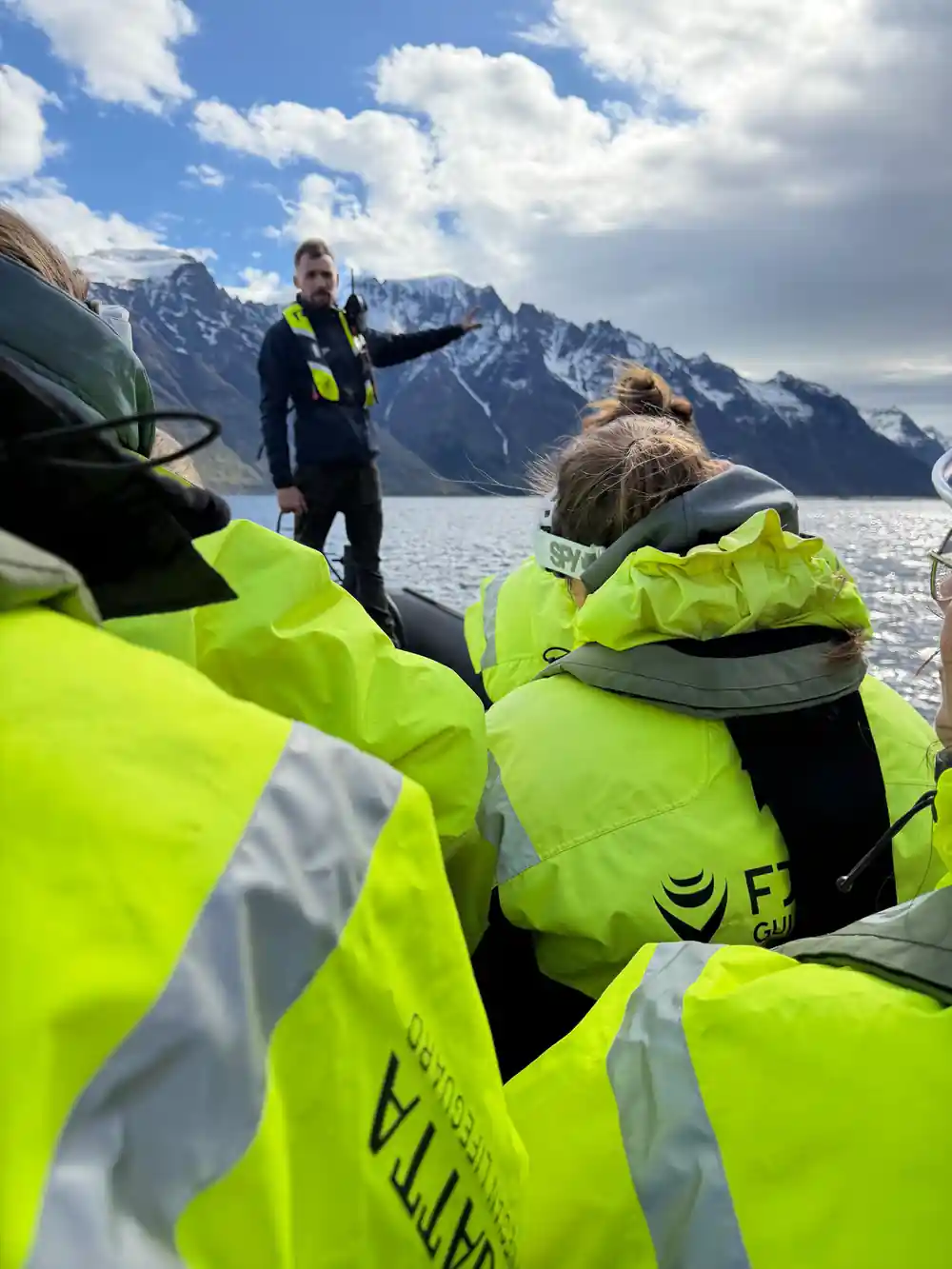
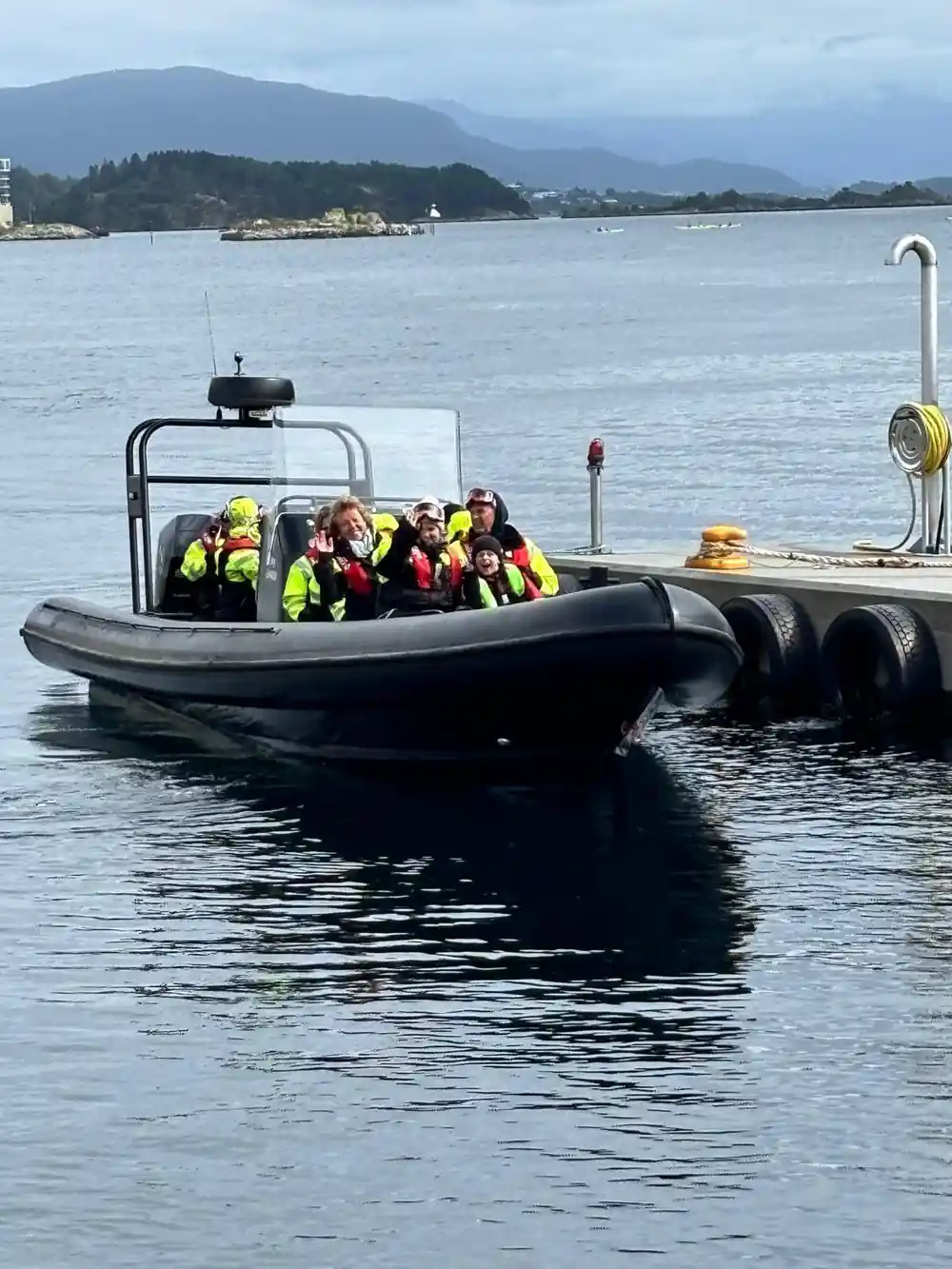
- The RIB Ålesund - Fjordsafari Hjørundfjord covers the fjord in 105 minutes from US$157, with a live guide in English.[4]
| RIB safari | Fjord cruise | One-way boat | |
|---|---|---|---|
| From | from US$157[4] | from US$115[5] | from US$58[6] |
| Duration | 105 minutes[4] | 5 hours[5] | 135 minutes[6] |
| Stops | Hjørundfjorden[4] | Trandal, Saebo, Urke, Øye[5] | Trandal, Sæbø, Urke[6] |
| Guide | Live tour guide: English[4] | Live tour guide: English[5] | Host or greeter: English[6] |
| Booking | Reserve now & pay later[4] | Reserve now & pay later[5] | Reserve now & pay later[6] |
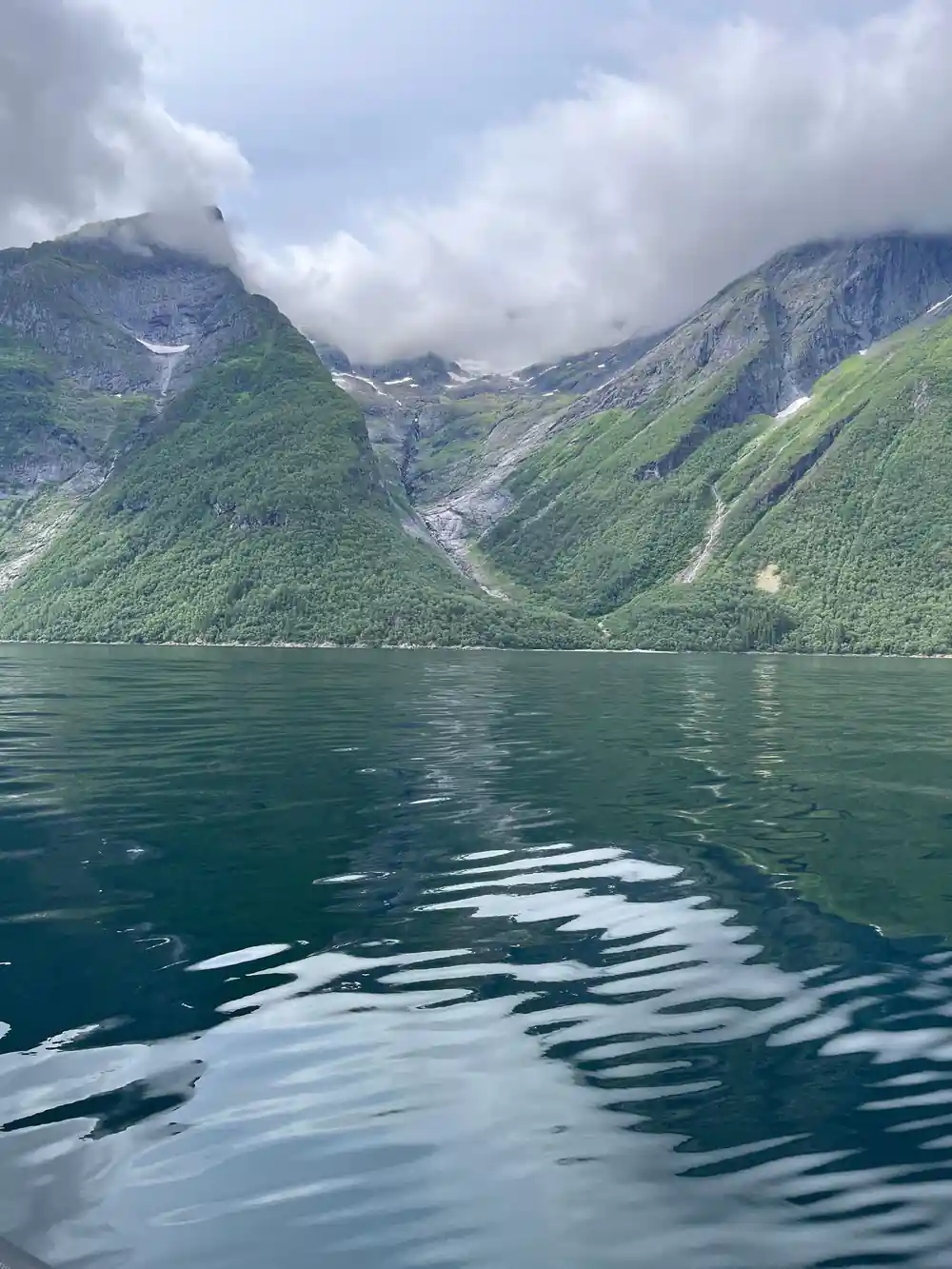
As an arm of the enormous Storfjord, the Hjørundfjord stretches for 35km beneath the jagged mountain peaks of the Sunnmøre Alps .
Verdict: paddle the Hjørundfjord, or ride it if the wind wins
On the water
- Wear a wetsuit or dry suit and a buoyancy aid, whatever the air temperature.
- Carry a spare paddle, a tow line and a pump for your group.
- Paddle with a group or a local guide on your first fjord day.
- Give ferries and the express boat plenty of room, and cross channels quickly.
Plan ahead
- Check the forecast twice and watch for wind building in the afternoon.
- Start early so you finish with daylight to spare.
- Book the RIB safari ahead in high season and note the free cancellation.
- Dress for cold water: the fjord stays cold all year, even on a mild day.
Why the Hjørundfjord rewards a kayak
Some fjords are so wide and open that you could forget you are afloat on salt water. The Hjørundfjord is not one of them. It stretches for 35km, a long arm of water threaded between steep rock, and from kayak height the walls on both sides look almost vertical.[1] Paddle away from the shore and the noise of the world drops away entirely: no engine, no road, just your own blade and water running off the hull.
The peaks above you belong to the Sunnmøre Alps, and one of them dominates everything. Slogen is a 1,564-meter mountain rising in the Sunnmøre Alps, with a spectacular pyramid shape that plunges directly into Norangsfjord, an arm of Hjørundfjord.[7] From the water it looks close enough to reach out and touch, though the summit is a serious hike for another day. Expect to stop paddling, drift, and stare upwards more than once.
The fjord suits kayaks because the water is often glassy in the early morning and the scale is forgiving. You can stay close to shore, slip between small beaches and jetties, and turn back whenever you want. A few hours on the water here feels like a full day somewhere smaller.
Kayak Sunnmøre: where to launch on the Hjørundfjord
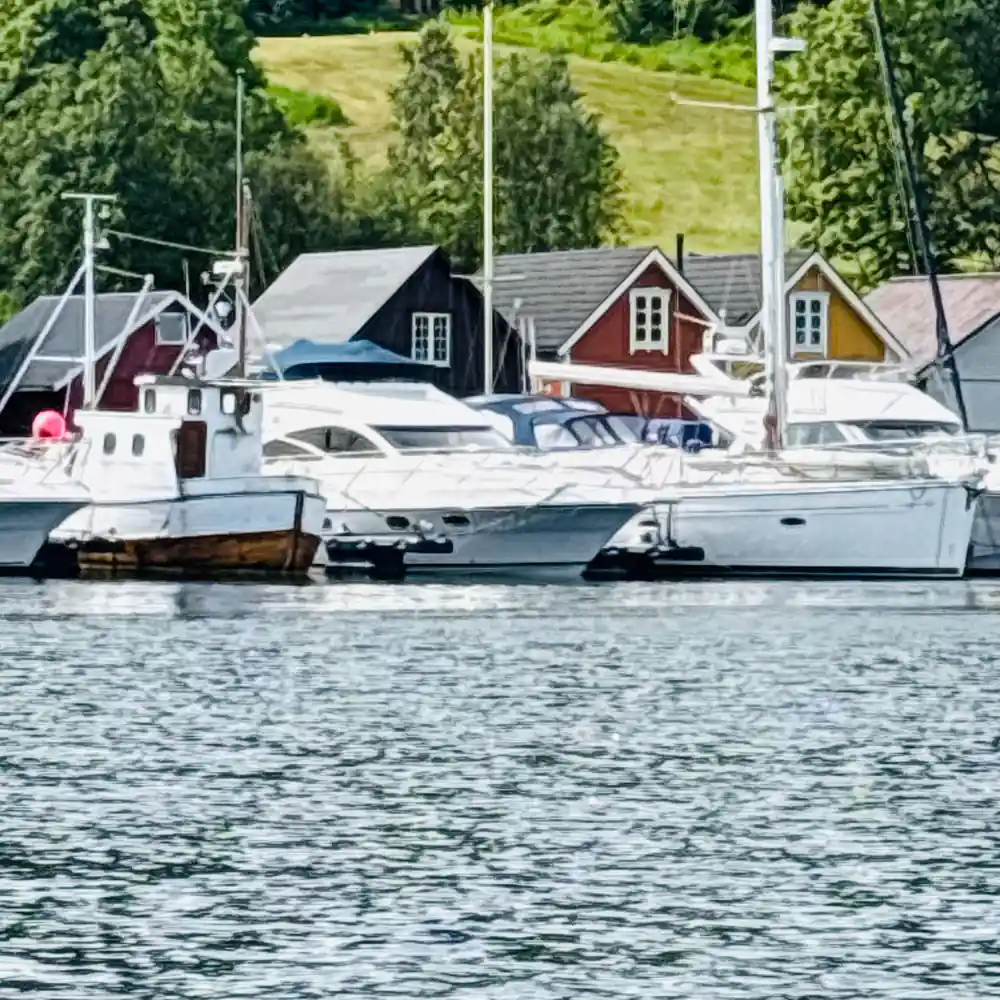
The villages along the fjord sit right at the water's edge, which is exactly what you want when you are carrying a kayak. Sæbø, Urke, Trandal and Øye all have a shoreline and a small harbour area, and they make obvious start and finish points. The summer express boat service from Ålesund to Øye stops at Trandal, Sæbø and Urke.[2]
Drivers have options too. There are ferry crossings between Ytre Standal, Trandal, Sæbø, Skår and Leknes, which lets a car with a roof rack move along the fjord in short hops rather than driving the long way around.[2] Check times locally before you commit to a shuttle plan.
A word about the water itself. It is deep, dark and cold, and the wind usually arrives from the west or funnels down the side valleys during the afternoon. Plan your longest crossing for the morning, hug the shore when the gusts pick up, and treat every headland as a place where the wind may be stronger than it looks from a distance.
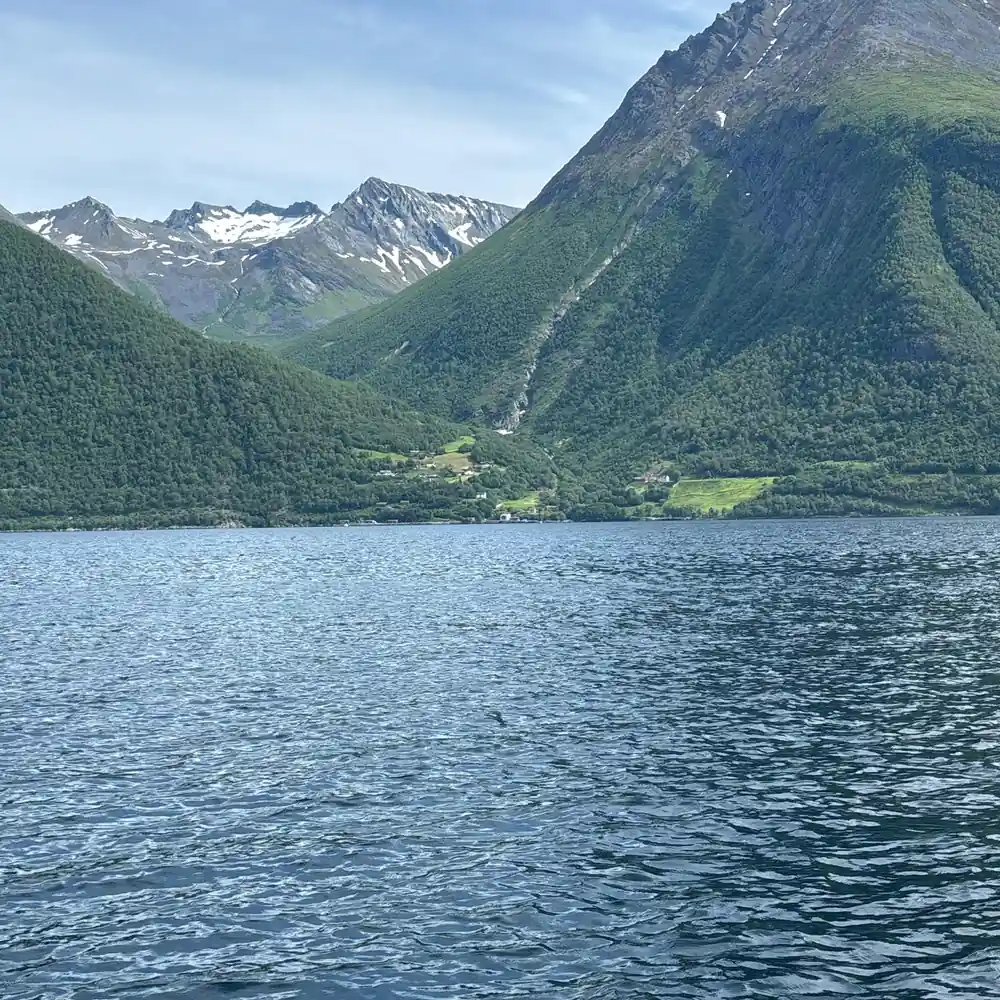
Morning calm on the Hjørundfjord, with the Sunnmøre Alps standing above.
What you might see from water level
Wildlife is one of the reasons to travel slowly. Harbour porpoises are the fjord's most common cetaceans, appearing singly or in small groups as they hunt fish near the surface.[3] You will often hear the puff of breath before you see a back, and then they are gone. Keep your distance, keep paddling steadily, and let them come to you.
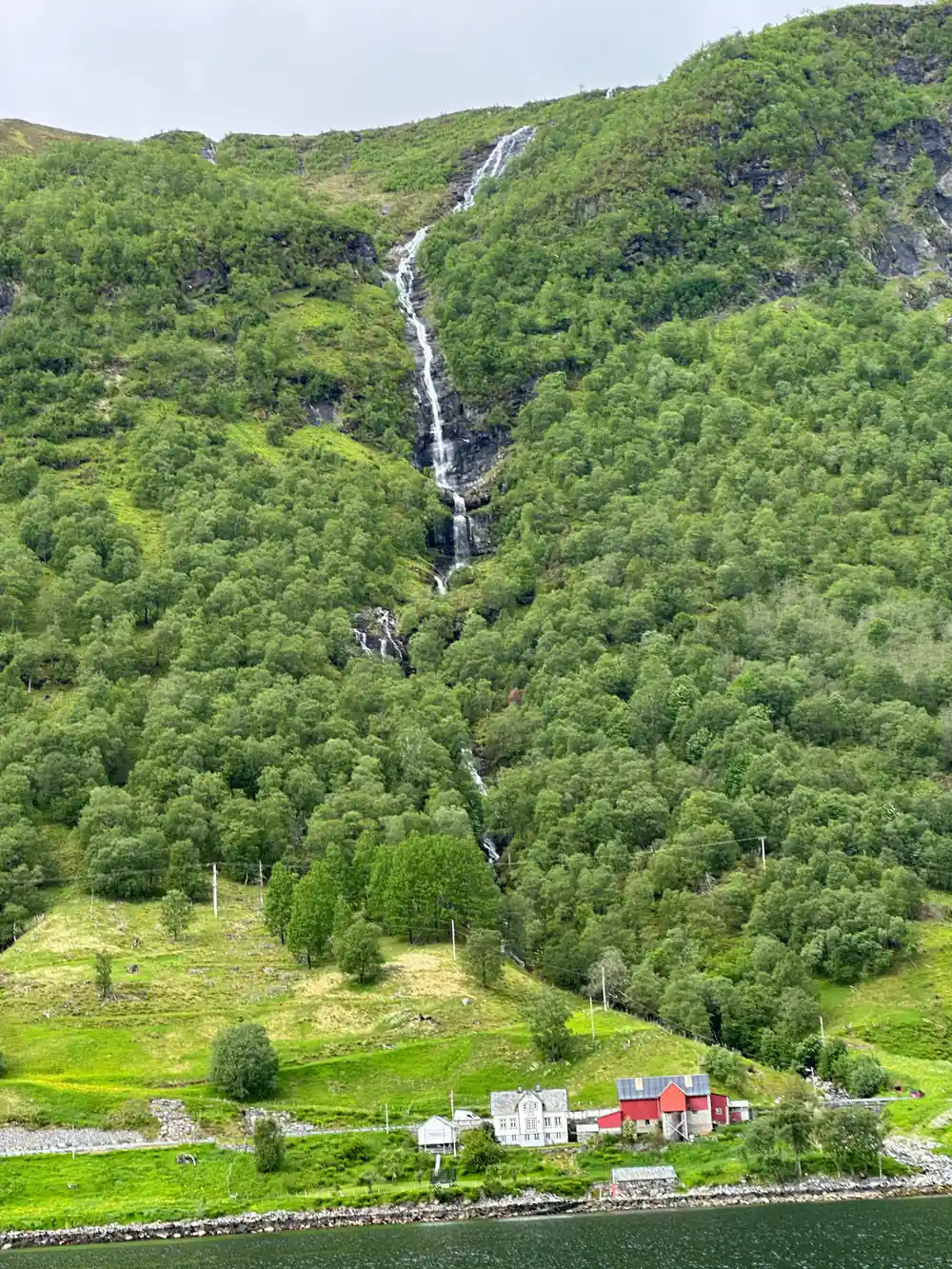
Above the waterline, sea eagles work the shoreline and the wooded slopes, and the cliffs hold nesting birds through spring and early summer. After heavy rain, waterfalls appear on faces that were dry the day before. Around the old farms, look for stone walls, small jetties and fruit trees, the marks of land that has been worked for a very long time.
Take binoculars if you have room for them. On flat water a kayak is quiet enough to get closer to wildlife than a boat, and low enough that birds often ignore you completely. Paddle with a camera in a dry bag and you will come home with photographs that no deck-level view can match.
When to paddle, and what the weather does
Ålesund, the usual gateway, has an oceanic climate with cold, rainy winters and cool summers.[8] Pack for rain and you will enjoy the good hours more. The fjord has its own moods on top of that, with cloud sitting on the peaks in the morning and lifting by lunchtime.
Summer is the season for paddling, with long daylight, milder air and the express boat running.[2] Water temperature is a different matter, and the fjord stays cold all year, so dress for immersion rather than for the air. A wetsuit or dry suit, a windproof layer, a warm hat and gloves will keep you comfortable when the cloud comes down.
Spring and autumn bring quieter water, fewer people and colder air. Winter paddling here is a serious undertaking that needs proper cold water equipment and local knowledge. Whichever season you choose, build in a spare day. Wind decides whether a fjord paddle happens.
from US$157
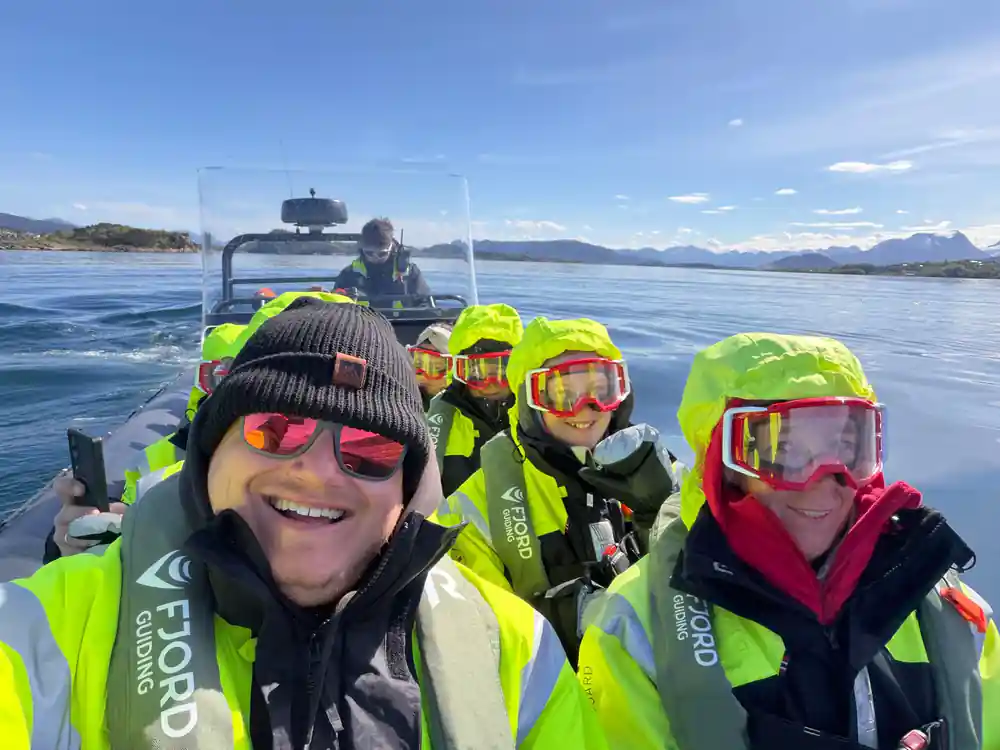
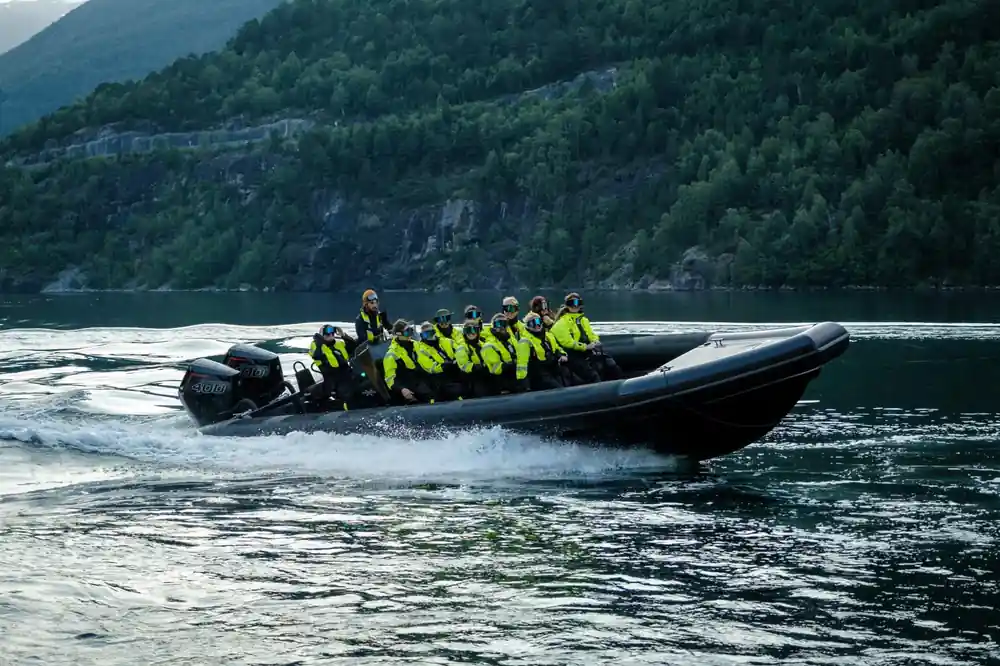
The RIB Ålesund - Fjordsafari Hjørundfjord runs 105 minutes through Hjørundfjorden with a live guide in English.[4]
Detours worth the extra paddle
If you turn up the Norangsfjord arm, the valley of Norangsdal opens above you. Lygnstøylvatnet, the lake in that valley, was formed by a rock fall from Keipen in 1908, and beneath its waters you can still see remains of the old road, the foundations of the farmhouses and the gateway.[9] The road runs close to the shore, which makes it an easy walk on a rest day.
Hotel Union Øye is a hotel established in 1891 that gained fame among European aristocracy and luminaries seeking nature without sacrificing luxury and comfort.[10] It is worth a look even if you are sleeping in a tent, and a good argument for ending a long paddle day with a proper meal.
Beyond that, the small settlements along the fjord reward wandering on foot: old boathouses, slips, orchard trees and paths that link farms to the water. Bring a map, ask locally about paths, and remember that much of the land around the fjord is working farmland with grazing animals and private ground.
Seeing the fjord without a paddle
Some days the wind wins, and some paddlers simply prefer an engine. The RIB Ålesund - Fjordsafari Hjørundfjord runs for 105 minutes with a live tour guide in English and stops in Hjørundfjorden, from US$157.[4] It is the trip booked from this site, and it covers a lot of water in a short time.
If you would rather travel slowly, the Hjørundfjord Fjord Cruise roundtrip from Ålesund takes 5 hours with stops at Hjørundfjorden, Trandal, Saebo, Urke and Øye, and starts from US$115.[5] On the Geirangerfjord side, the RIB Hellesylt: Fjordsafari Geirangerfjord runs for 1 hour from US$104 and stops at Hellesylt, Seven Sisters Waterfall, Friaren and Geirangerfjord.[11]
These trips sit easily alongside a kayak day: paddle in the morning, ride in the afternoon, and see the same walls from a different height. Each listing offers free cancellation up to 24 hours in advance and reserve now, pay later.[4][5][11]
Practical planning for a Hjørundfjord kayak day
Decide where you will finish before you decide where you will start. With ferries and the summer express boat linking the villages, a one-way paddle is often simpler than an out and back against the wind.[2] Check the boat the day before, and leave a margin for a late finish.
Check the forecast the evening before and again in the morning. Wind is what decides a fjord paddle: it builds waves quickly on deep water, and it usually strengthens through the afternoon. Give ferries and the express boat plenty of room, cross channels at right angles and without dawdling, and keep a tow line and a spare paddle within reach.
Take more food and water than you think you need, a dry bag for your phone, and a way to call for help. Tell someone your plan and your expected finish time. On a long fjord, the weather can turn while you are on the far side of a headland, and the nearest road may be a long way from the nearest beach.
From prices for fjord boat trips from Ålesund and Hellesylt
Every value is a from price on a GetYourGuide listing:[4][5][6][11]
What a boat day on the fjord costs
US dollar from prices per person on GetYourGuide:[4][5][6][11]. Child rates are not shown on the listings.
When to plan your Hjørundfjord kayak trip
Plan a fjord paddle day
Choose your villages
Pick a start and a finish from Sæbø, Urke, Trandal or Øye, then work out how you will get back.
Read the forecast
Wind decides the day. Look at morning and afternoon separately, and have a shorter plan ready to swap in.
Sort your kit
Wetsuit or dry suit, buoyancy aid, spare paddle, tow line, dry bag, food and water for longer than you think.
Time the boats
Ferries and the summer express boat share the fjord with you, so cross channels quickly and keep clear.
Leave a plan
Tell someone where you are going and when you expect to be back, and carry a way to call for help.
Add a RIB safari to your Hjørundfjord kayak trip
from US$157Reserve now & pay later