At a glance
- The Hjørundfjord stretches for 35km, and Slogen is a 1,564-meter mountain in the Sunnmøre Alps whose pyramid shape plunges into Norangsfjord.[4][5]
- A summer express boat from Ålesund to Øye stops at Trandal, Sæbø and Urke, and ferries link Ytre Standal, Trandal, Sæbø, Skår and Leknes.[6]
- Hotel Union Øye was established in 1891 and gained fame among European aristocracy and luminaries seeking nature without sacrificing luxury and comfort.[7]
- In 1908 a rock fall from Keipen formed Lygnstøylvatnet in Norangsdal, and the old road, farmhouse foundations and gateway are still visible beneath the water.[8]
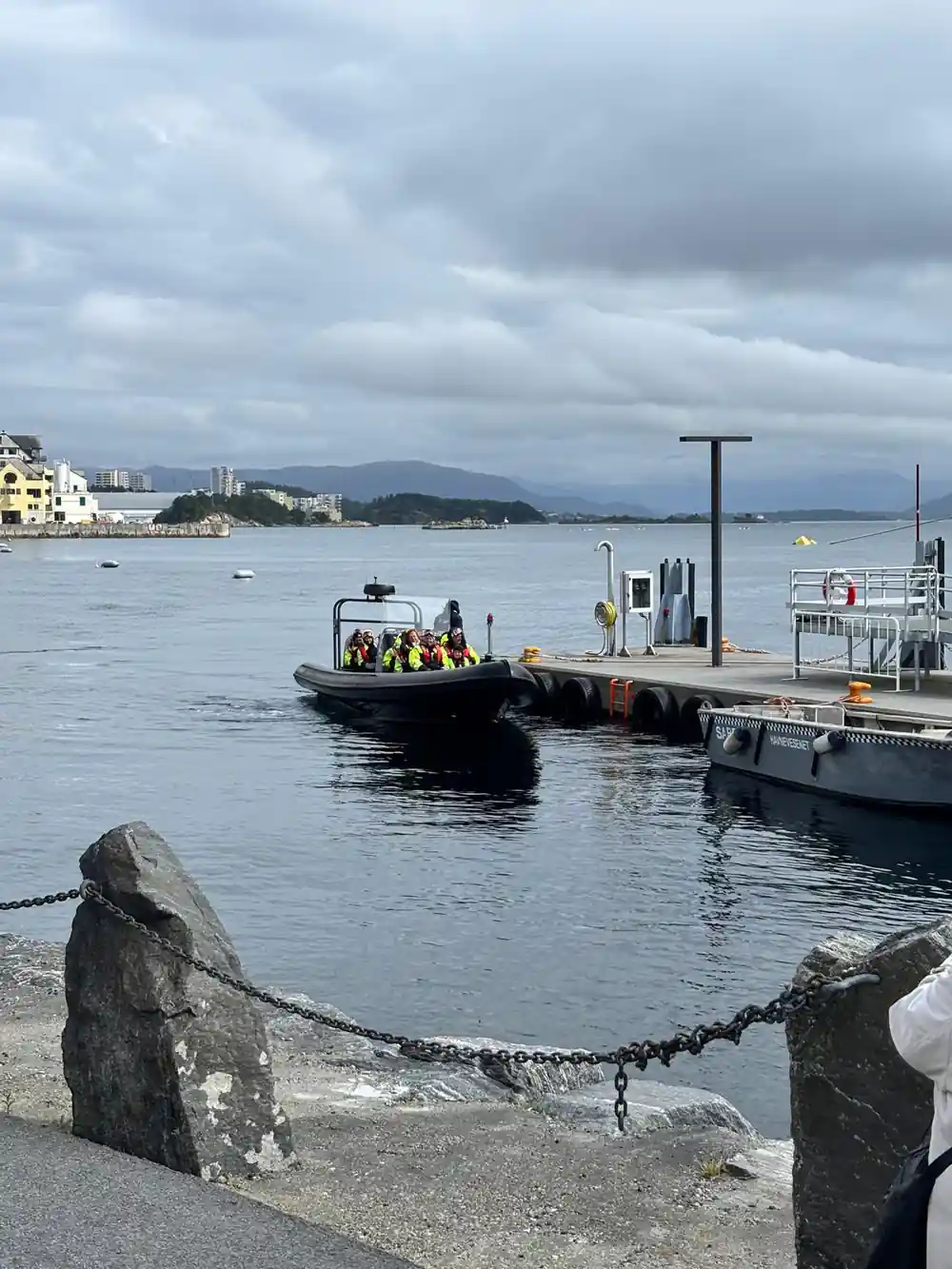
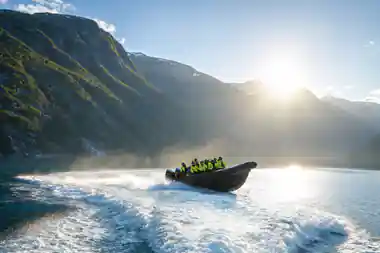
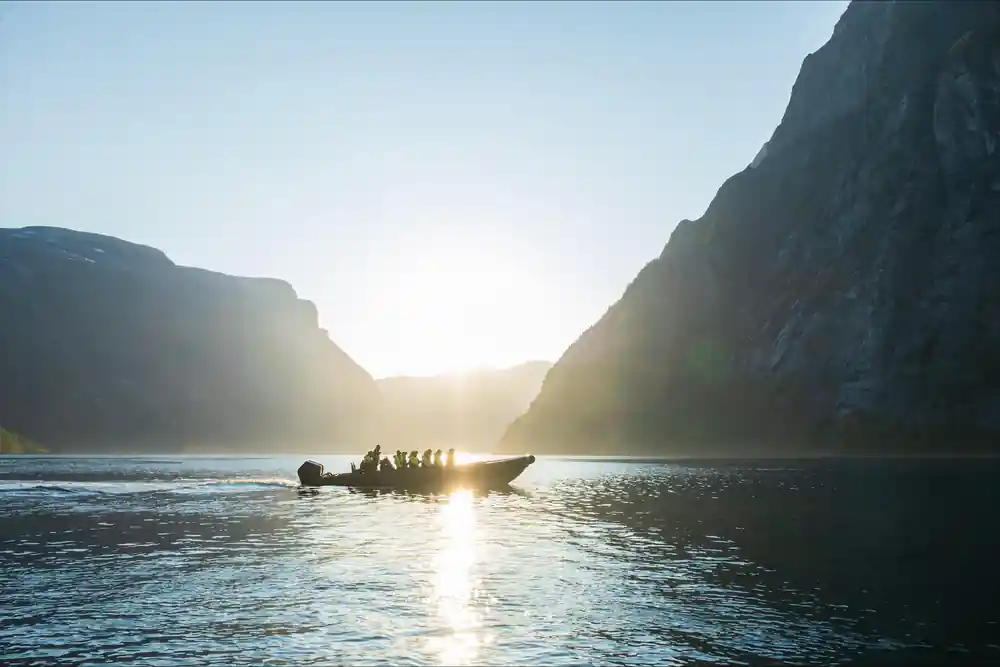
- The RIB Ålesund - Fjordsafari Hjørundfjord runs 105 minutes with a live tour guide in English, stops at Hjørundfjorden and has prices from US$157.[9]
| RIB safari | Roundtrip cruise | RIB with Uteguiden | |
|---|---|---|---|
| From | from US$157[9] | from US$115[10] | from US$158[11] |
| Time on the water | 105 minutes[9] | 5 hours[10] | 2 hours[11] |
| Stops | Hjørundfjorden[9] | Hjørundfjorden, Trandal, Saebo, Urke, Øye[10] | Hjørundfjord[11] |
| Guide | Live tour guide in English[9] | Live tour guide in English[10] | Live tour guide in English[11] |
| Feel | Fast, open boat, close to the spray | Slow, seated, plenty of photo time | Fast RIB run, guided by Uteguiden.com |
Established in 1891, Hotel Union Øye gained fame when the aristocracy and luminaries of Europe sought experiences to indulge in nature without sacrificing luxury and comfort.
Should you build a day around the Hjørundfjord?
Plan ahead
Farms on the Fjord's Vertical Edge
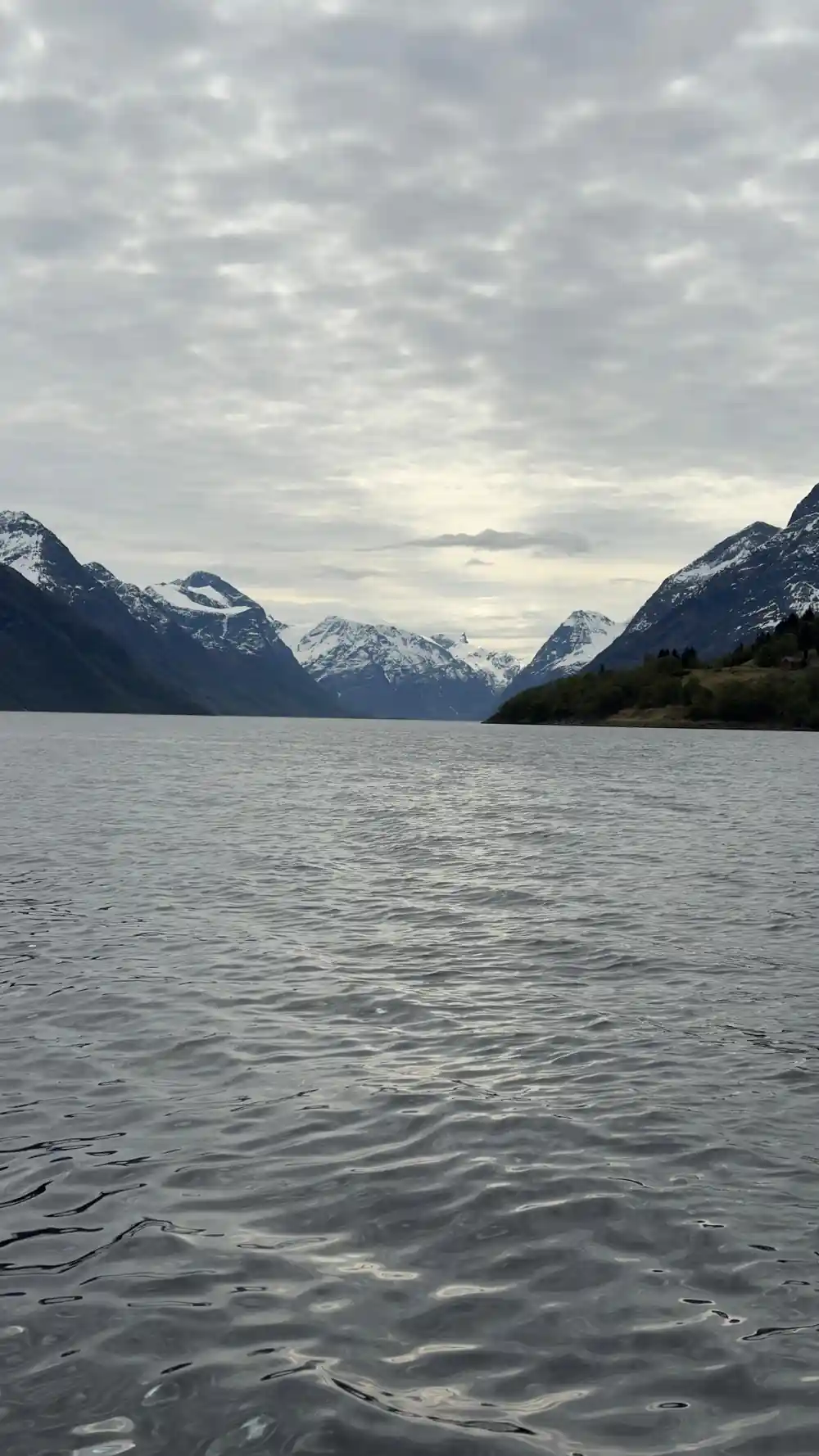
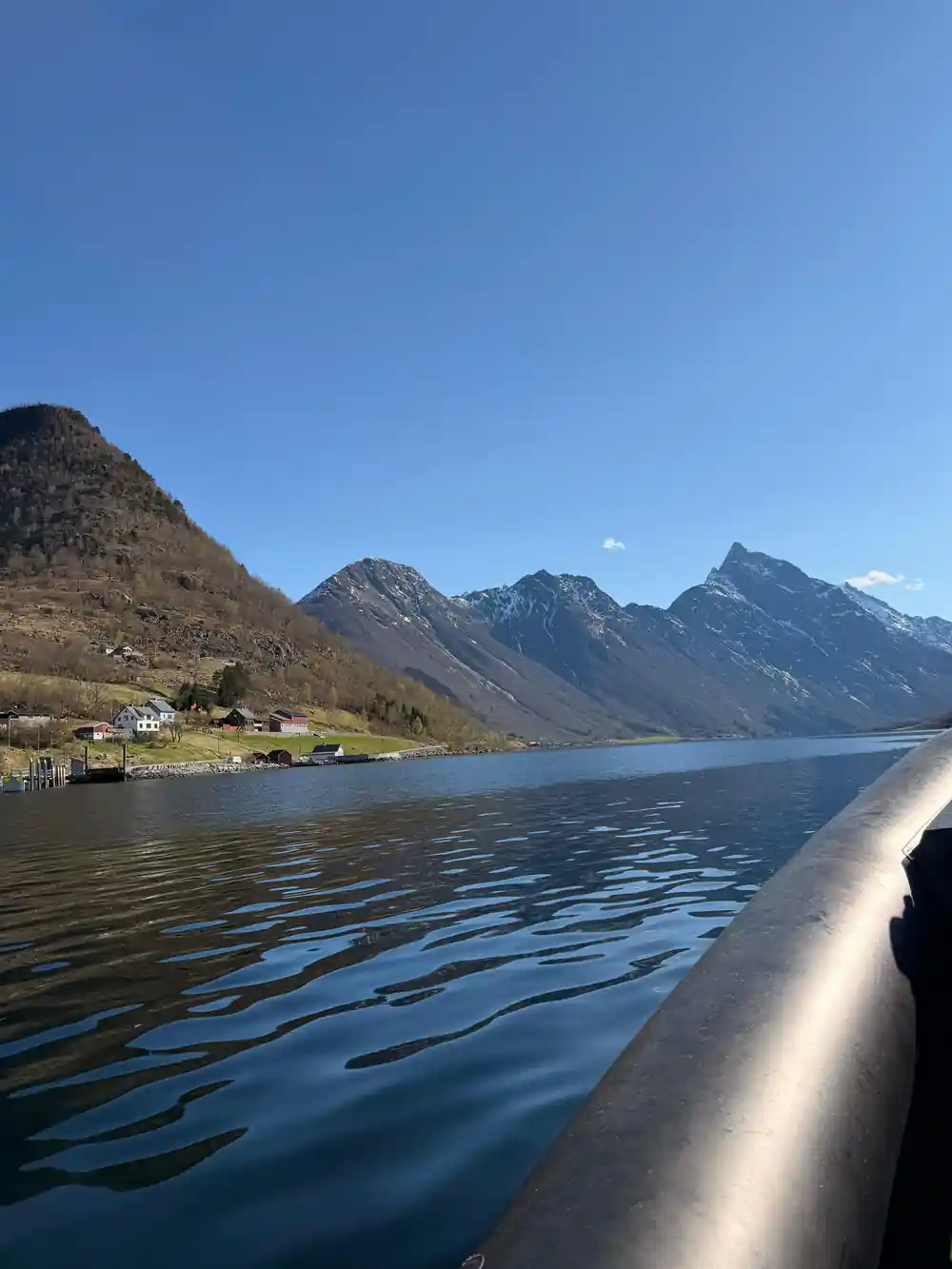
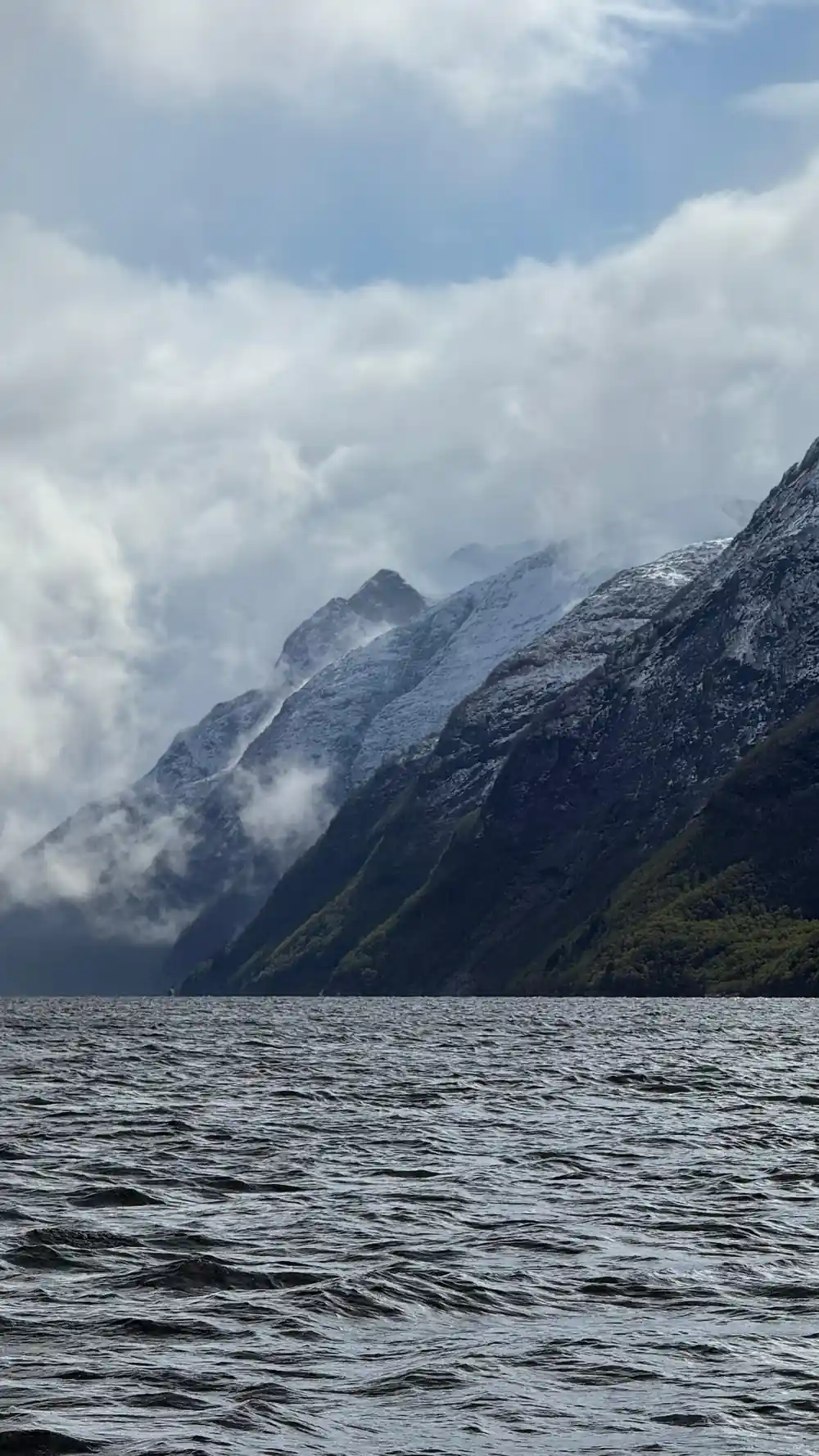
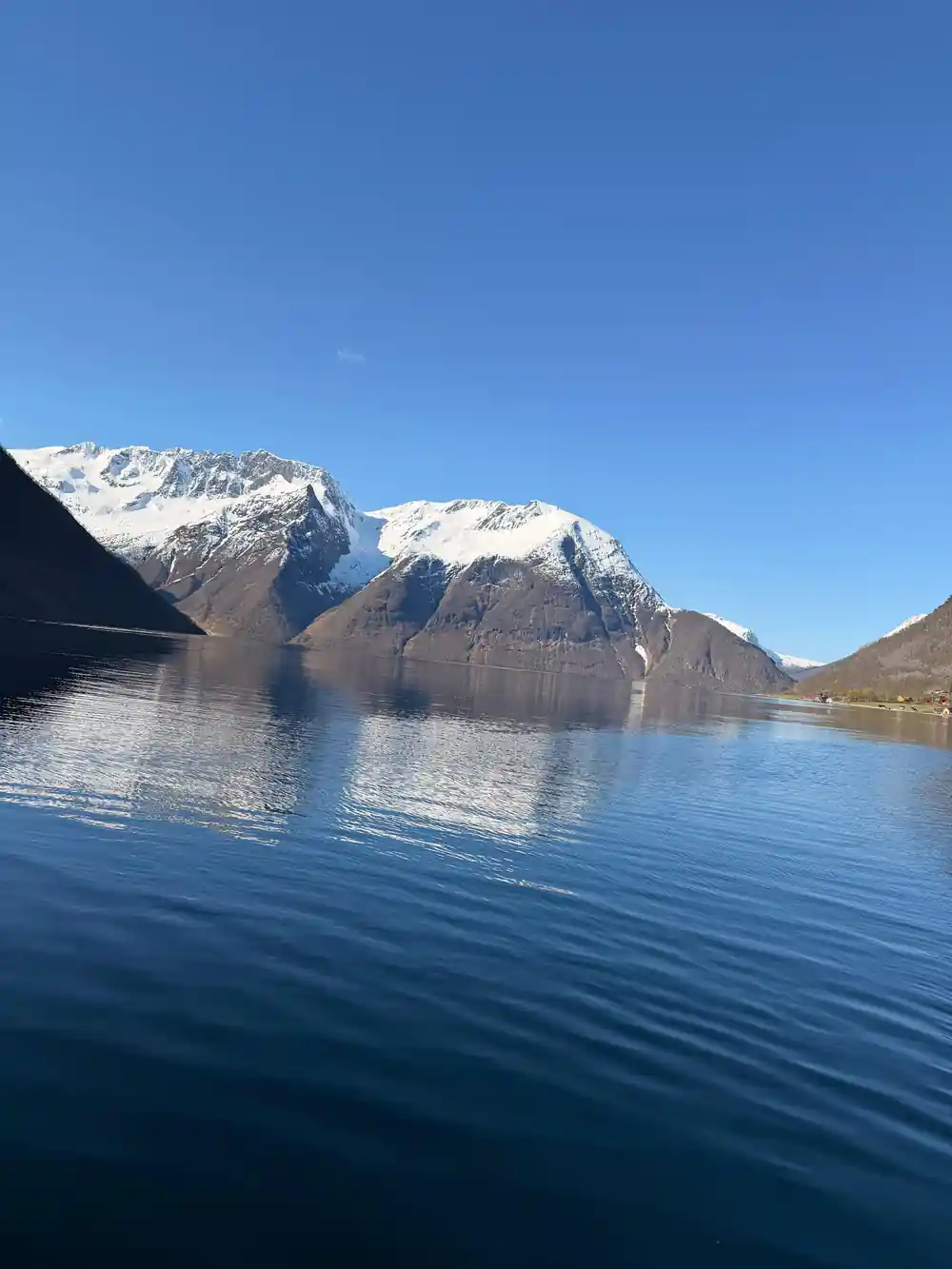
The Hjørundfjord stretches for 35km, and the mountains around it do not step back politely: they drop straight into the water, and the farms begin wherever there is a ledge wide enough to stand on.[4] Slogen is the shape people remember, a 1,564-meter mountain in the Sunnmøre Alps whose pyramid form plunges directly into Norangsfjord, an arm of Hjørundfjord.[5] From an open boat you see the whole wall of rock at once, and the small holdings on it look pinned to the slope rather than built on it.
These farms were never large. A strip of grass, a cluster of buildings, a track that climbs instead of running along: that is the pattern you can still pick out from the water, and it tells you how the land was worked. Hay and livestock, pasture high on the mountain shoulder in summer, and the fjord used as road, larder and laundry at the same time. Boathouses sit at the tideline, a reminder that the boat came before the road here. Thick walls, small windows, roofs weighted against the wind: the buildings were made for weather, not for show.
The Villages of Trandal and Bjørke
Villages on the Hjørundfjord are strung along the water rather than gathered around a square, and many are reached by boat or by a road that takes the long way round. There is an express boat service from Ålesund to Øye in summer that stops at Trandal, Sæbø and Urke.[6] If you come by car, ferry crossings between Ytre Standal, Trandal, Sæbø, Skår and Leknes link the shoreline.[6] The water is the main street here, so read a timetable before you plan a walk.
Trandal and Bjørke are small enough that a short stop does not feel rushed. You will find the same furniture of village life here as anywhere along this coast: a church, a shop if you are lucky, a jetty, a boathouse, and a noticeboard telling you when the next boat leaves. Walking shows you how tightly the houses fit between the water and the slope, and how much of the ground was won rather than given.
The old farms were worked from the water up, and you can still see how: a path running from the jetty to the house, hay barns placed where the sun reaches them, a wall or two keeping the worst of the slope in place. Small details, but they answer the question of how anyone lived here at all.
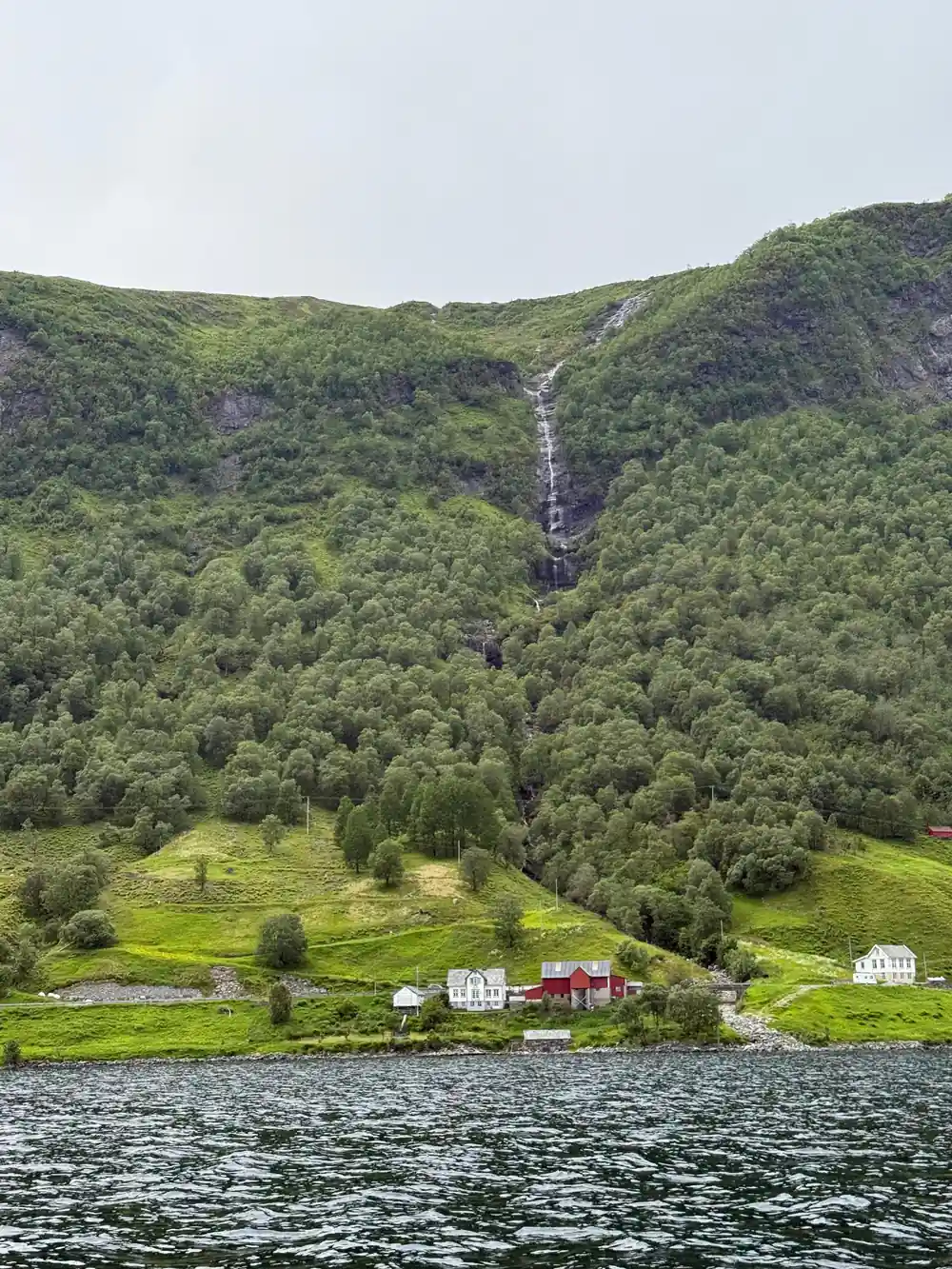
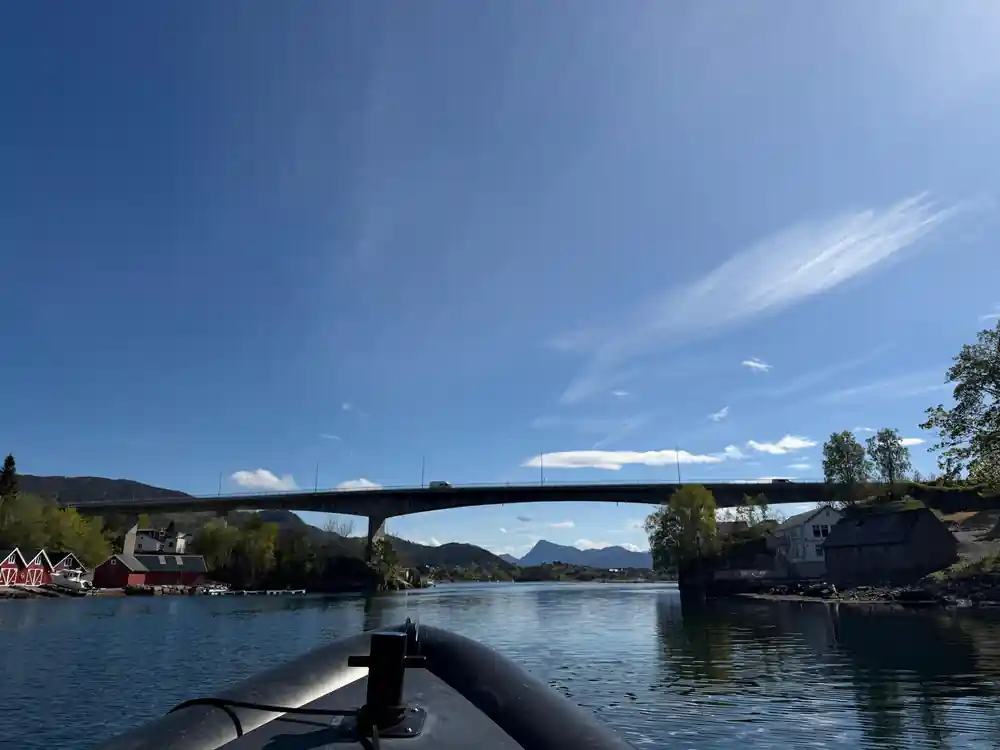
Boathouses and small farms still sit at the tideline along the Hjørundfjord.
English Mountaineers in the Victorian Era
The peaks above the fjord drew climbers from Britain, and the people who came needed somewhere to sleep and somewhere to eat. Hotel Union Øye was established in 1891 and gained fame when the aristocracy and luminaries of Europe sought experiences to indulge in nature without sacrificing luxury and comfort.[7] Comfort was part of the package rather than a compromise, and that changed what a mountain holiday could look like.
The pattern of those visits still shows in the landscape. Guides were hired from the farms, paths were worn in, and the names of summits travelled home in letters. Slogen, the pyramid that plunges straight into Norangsfjord, gives you the measure of what they climbed.[5] You do not have to climb anything to feel the scale: a boat along the base of these walls does it without effort.
Sykkylven: Where the Fjord Meets Working Life
Sykkylven sits where the Hjørundfjord opens toward wider water, and it feels like a town that works for a living: workshops, yards, boats being mended, errands being run. Furniture making is the trade the name is best known for, and wood turns up in ordinary conversation here the way weather does elsewhere. Come ashore and you see the unglamorous side of fjord life, which is often the most interesting part.
Two names worth looking up before you travel are the Sykkylven Museum and the Sykkylven Naturmuseum. The town is also the kind of place where asking directions turns into a conversation, so do not worry about the name itself: ask how to pronounce Sykkylven and you will get a patient lesson, a soft start and an even rhythm, and nobody minds a first attempt that goes wrong.
Sykkylven is often just a name on a timetable or a map, and that is fine. If you do stop, treat it as a normal town: buy something, ask something, walk a street that has nothing to do with tourism, and the fjord will make more sense afterwards.
from US$157
An open RIB safari into the Hjørundfjord, guided in English, with free cancellation and the option to reserve now and pay later.
Sacred and Secular Gathering Places
On a fjord where travel was by water, the buildings that gathered people were made to be seen from the sea: churches on low knolls, chapels at the roadside, halls with big windows, and graveyards sitting quietly above the tideline. In Sykkylven, Sykkylven Church is the local landmark to look up if you are spending time ashore. Many of these buildings are still used for exactly what they were built for.
Gatherings here were practical as well as sacred. Boathouse walls were where nets were mended, the jetty was where news arrived, and the hall was where weddings, funerals and concerts happened. Walk through a village on a wet afternoon and look for the war memorial, the flagpole and the bench with the best view; that small trio tells you where the village meets. Look too for doors that face the water and steps cut into rock.
The Landscape as Living Archive
Some of the fjord's history is underwater and still legible. In 1908, a rock fall from Keipen formed Lygnstøylvatnet in Norangsdal, and beneath its waters you can still see remains of the old road, the foundations of the farmhouses and the gateway.[8] It is a quiet, strange sight: a lake with a road and a farm gate under the surface, and reflections that do not match anything above the water.
Above the waterline the archive is written in stone. Walls that follow the contours, terraces that were once hay meadows, the occasional abandoned house with a tree growing through the roof, and paths that were used daily and are used weekly now. Reading them takes no special knowledge, only a slow look from the deck and a walk wherever the boat stops. The mountains themselves are the oldest document, and they are still being written.
Planning Your Fjord Journey
The quickest way to see the Hjørundfjord is from an open RIB. The RIB Ålesund - Fjordsafari Hjørundfjord lasts 105 minutes, stops at Hjørundfjorden and has a live tour guide in English, from US$157.[9] You can reserve now and pay later, and free cancellation applies up to 24 hours in advance for a full refund.[9]
If you would rather move slowly, the summer express boat from Ålesund to Øye stops at Trandal, Sæbø and Urke, so you can step off and walk for a while.[6] Keep watching the water: harbour porpoises are the fjord's most common cetaceans, appearing singly or in small groups as they hunt fish near the surface.[13] Ålesund has an oceanic climate with cold, rainy winters and cool summers, so a windproof layer earns its place in your bag whatever the morning looks like.[12]
Give the day room. The fjord is long, the villages are small, and the light changes every view between one stop and the next. A short boat trip plus a village walk beats a packed schedule, and if you miss a ferry there is usually another.
Time on the water: three fjord trips
Durations as listed for each tour: 1 hour[14], 2 hours[11] and 5 hours[10].
From-prices for the fjord trips
US dollar from-prices from these listings:[9][10][11][14]. Each gives a single from-price.
When to book and when to travel
How to plan a fjord day
Read the fjord first
Get the shape of the Hjørundfjord in your head before you book anything: the water is long, the villages are small, and the mountains decide the light.
Pick your boat
Choose the open RIB for a fast, wet run, or the roundtrip cruise for a slow loop with village stops.[9][10]
Book with a cushion
Book with free cancellation up to 24 hours in advance for a full refund, and reserve now and pay later.[9]
Keep a land half-day
Keep time for the villages the boats stop at, the churches and the small local museums, where the working history is easiest to read.
Pack for spray
Ålesund has an oceanic climate with cold, rainy winters and cool summers, so bring a windproof layer for an open boat.[12]
See the Hjørundfjord from the water on an open RIB safari
from US$157Reserve now & pay later